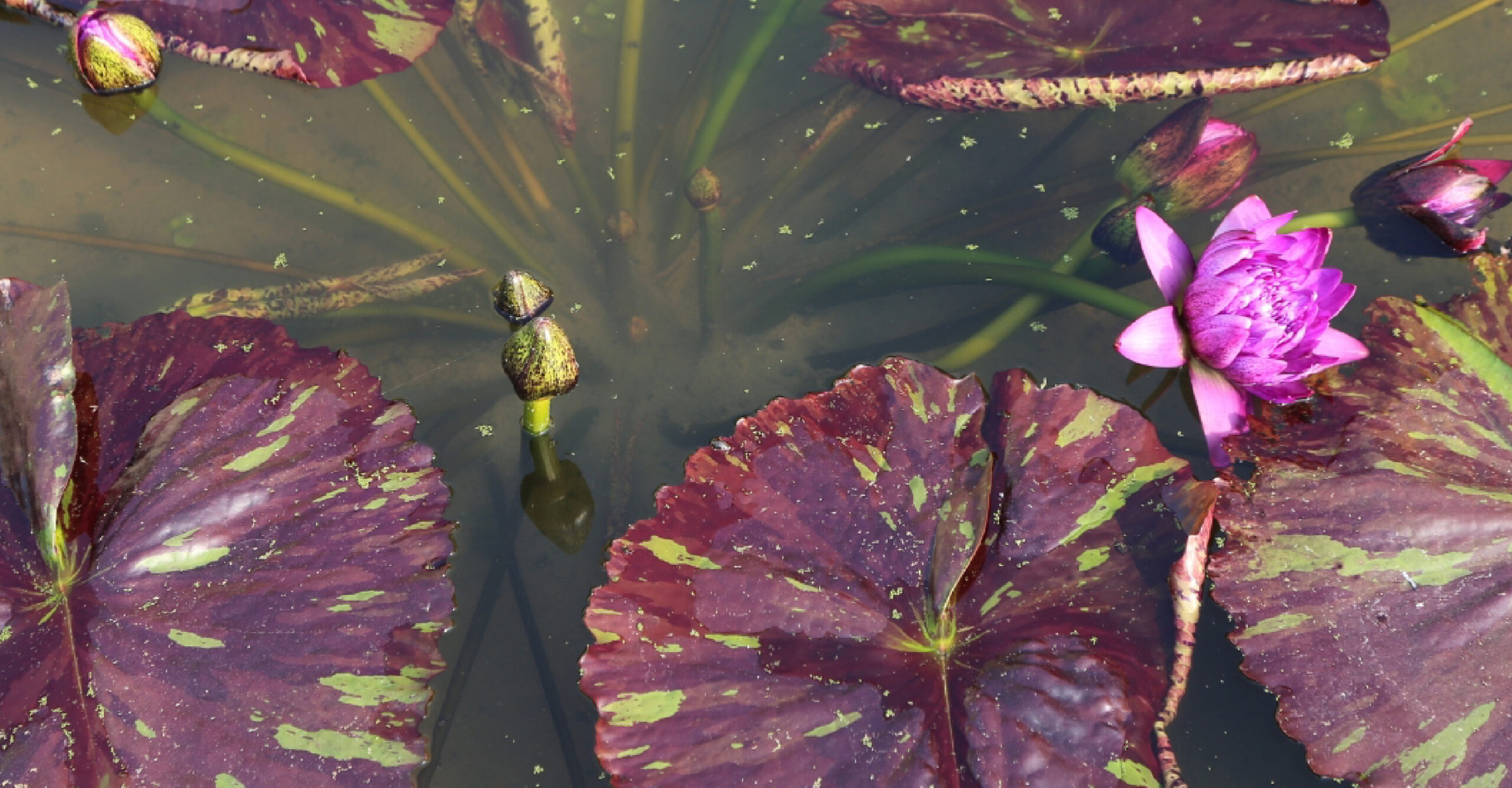
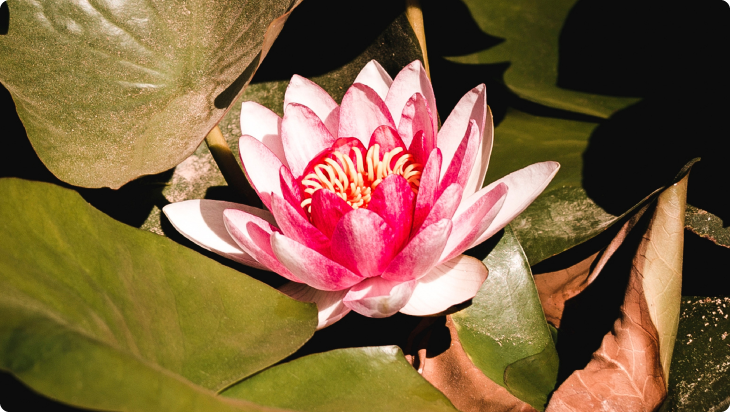
“Before there was land,” Venkat Raman Singh Shyam says over the phone, “before there were forests, mountains, fields, houses, villages, animals, birds or people, there was only water. And the water lily.”
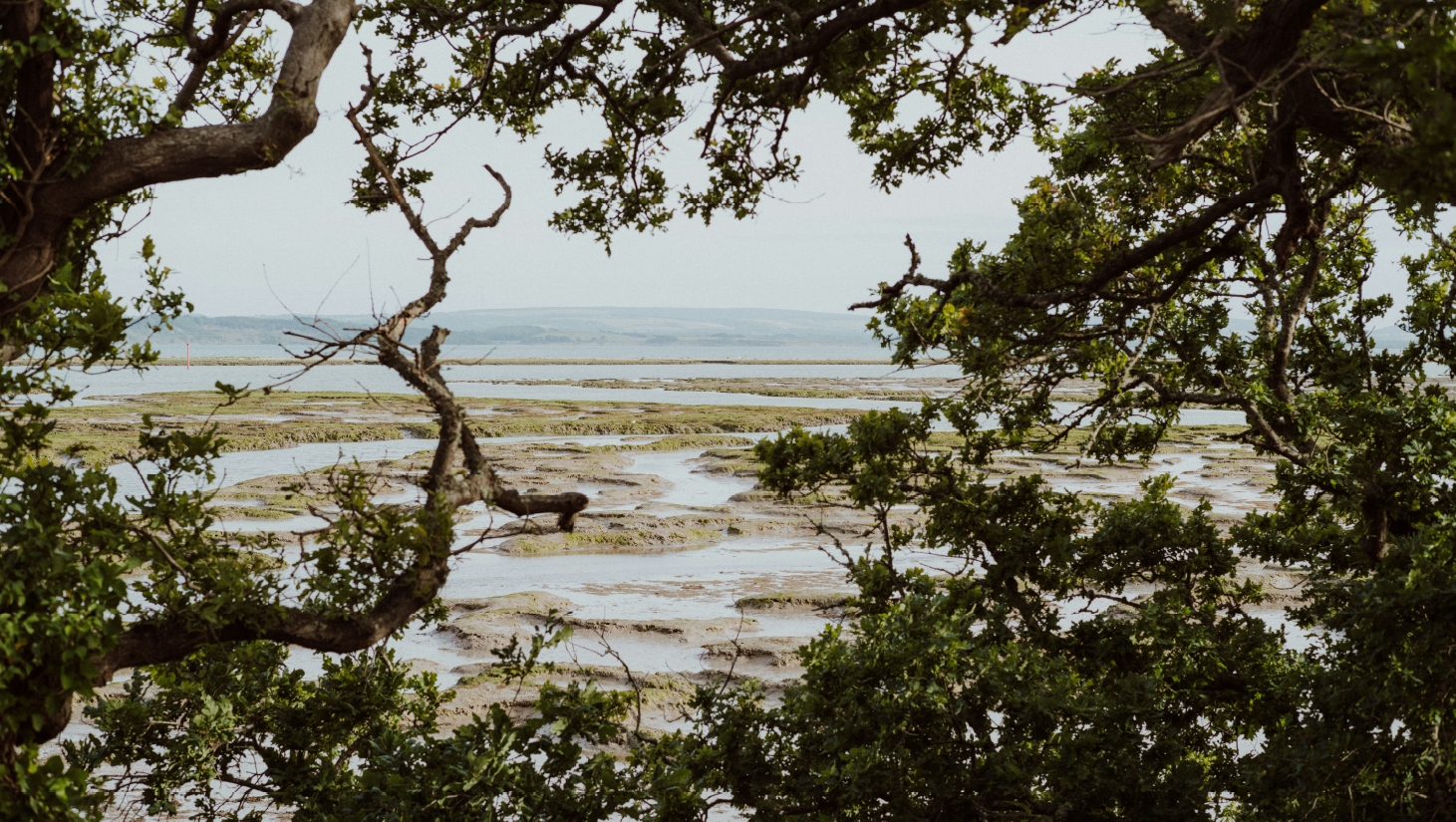
He is speaking from Sijhora, the village in central India where he was born in 1970, in the forests adjoining Kanha Tiger Reserve. The water lily grows around him, in ponds and rain-fed lakes, among fish, frogs, snakes, crocodiles, dragonflies and migratory birds. “There is a river barely a few kilometres from our house,” he says. He means the Halon, which flows through the Kanha landscape before joining the Narmada.
This is Gond country, or Gondwana: a vast region of central India associated with the Gonds, one of India’s largest Adivasi or Indigenous communities. Shyam belongs to the Pardhan Gonds, storytellers who once travelled from village to village, carrying the myths of the land through song, dance and ritual. Their visual language, made up of simple dots and dashes, once painted on the mud walls and floors of homes with natural pigments, moved onto paper and canvas in the 1980s through Shyam’s uncle, the pioneering artist Jangarh Singh Shyam, under whom Shyam later apprenticed.
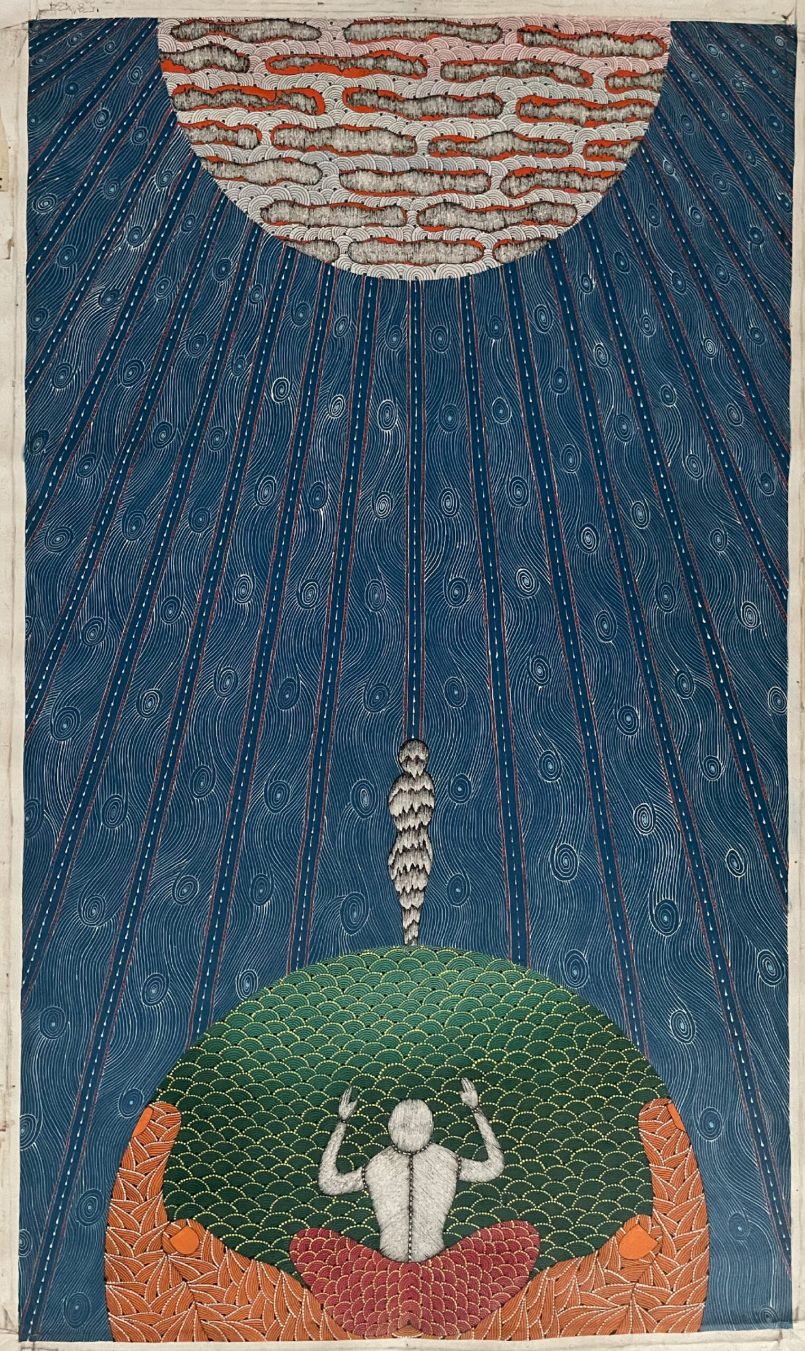
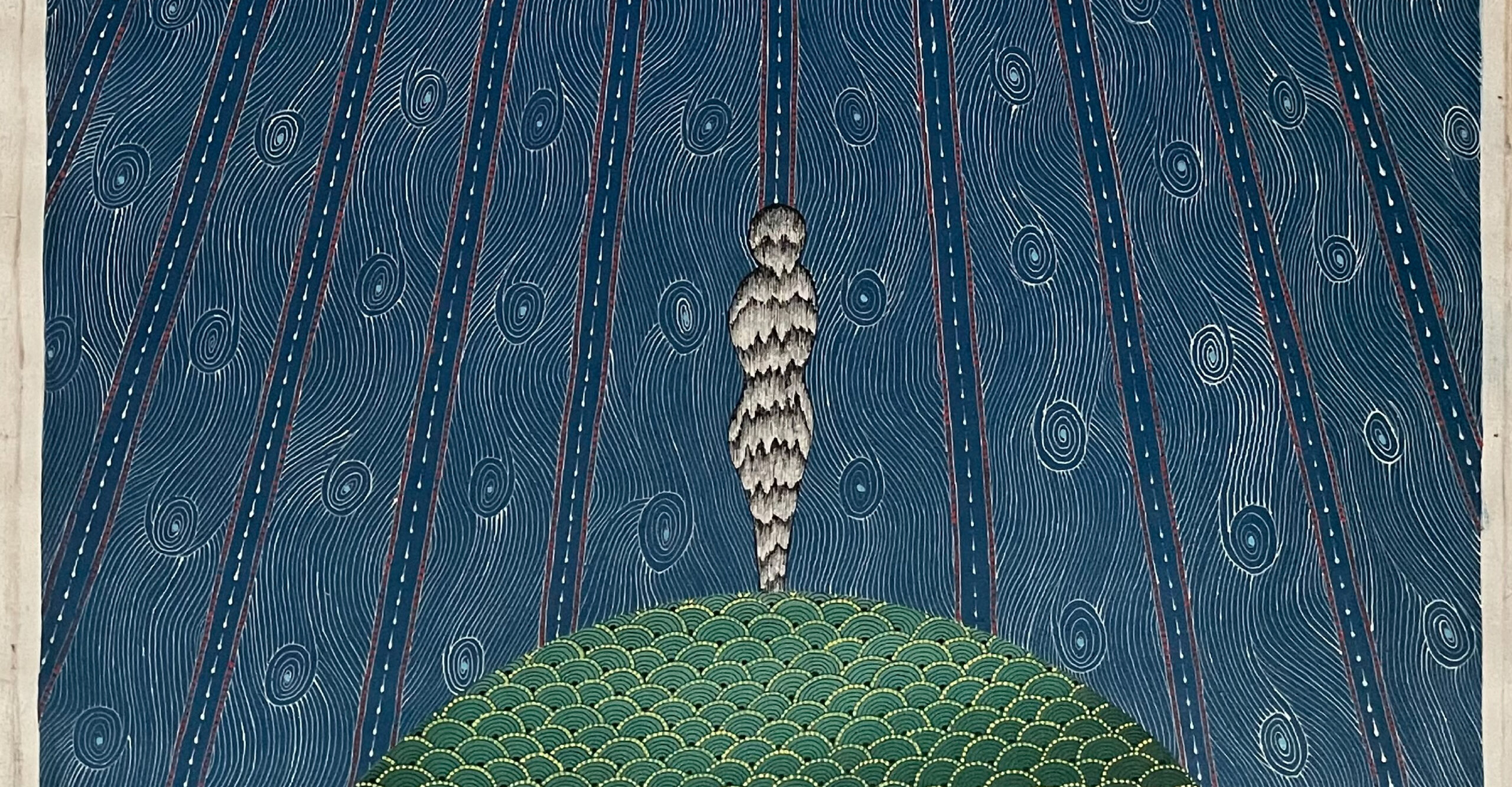
“Our land is ancient,” Shyam says. Indeed, this region traces itself back to Gondwanaland, the southern supercontinent that, over hundreds of millions of years, broke apart into Africa, South America, Antarctica, Australia, Madagascar, Arabia and the Indian subcontinent. And Shyam has painted this beginning.
“If we build only concrete buildings and concrete roads,” he asks, “where will the water go?”
As his mother told him, and as Pardhan Gond oral histories recall, the world was once an endless body of water. In it, Baradev, the Great God, rested inside the hollow stem of the water lily. For thousands of years, the other gods and goddesses came to see him, taking the forms of fish, snakes, turtles, crocodiles, and other water creatures.
But Baradev longed for land. One day, he rubbed the dirt from his body and made himself into a crow. He sent the crow across the endless waters in search of soil. The crow flew until it met a crab, the only creature capable of travelling down to Patal, the underworld. There, the crab found an earthworm, squeezed five balls of soil from its body, and carried them back to the surface.
The crow returned with the crab to Baradev. A spider was asked to spin its web across the waters. Soil was spread upon it, and slowly, the earth appeared, and with it, plants, animals and all the other life.
“In short, land needs water to make life,” Shyam says. The Halon remains one of Sijhora’s main sources of water, keeping the soil moist, feeding fields and lakes, and sustaining agriculture, another primary livelihood of the Pardhan Gonds. In the middle of the river, there is a shrine made with white stone. “People consider it sacred,” he says. “Just like people place a deity under a tree so that no one cuts the tree, similarly, a shrine at the bend of a river becomes a way of protecting its waters from being poisoned or built upon.”
Yet the waters he describes are changing rapidly. Rampant deforestation and mining have worsened flooding, while industries have polluted the river with chemicals. In villages, mud houses are slowly being replaced by concrete. “If we build only concrete buildings and concrete roads,” he asks, “where will the water go?”
“And dams!” Shyam adds. Near Sijhora, a dam has been built on the river. Across the wider Narmada valley, such conflicts gave rise to one of India’s most important environmental movements: the Narmada Bachao Andolan, or Save the Narmada Movement, which emerged in the 1980s against large dam projects that displaced villages, submerged forests and altered the lives of farmers, fisherfolk and Adivasi communities—often pushing them into urban migration and precarious wage labour.
“Painting is information. Painting is memory. And we have to paint our stories.”