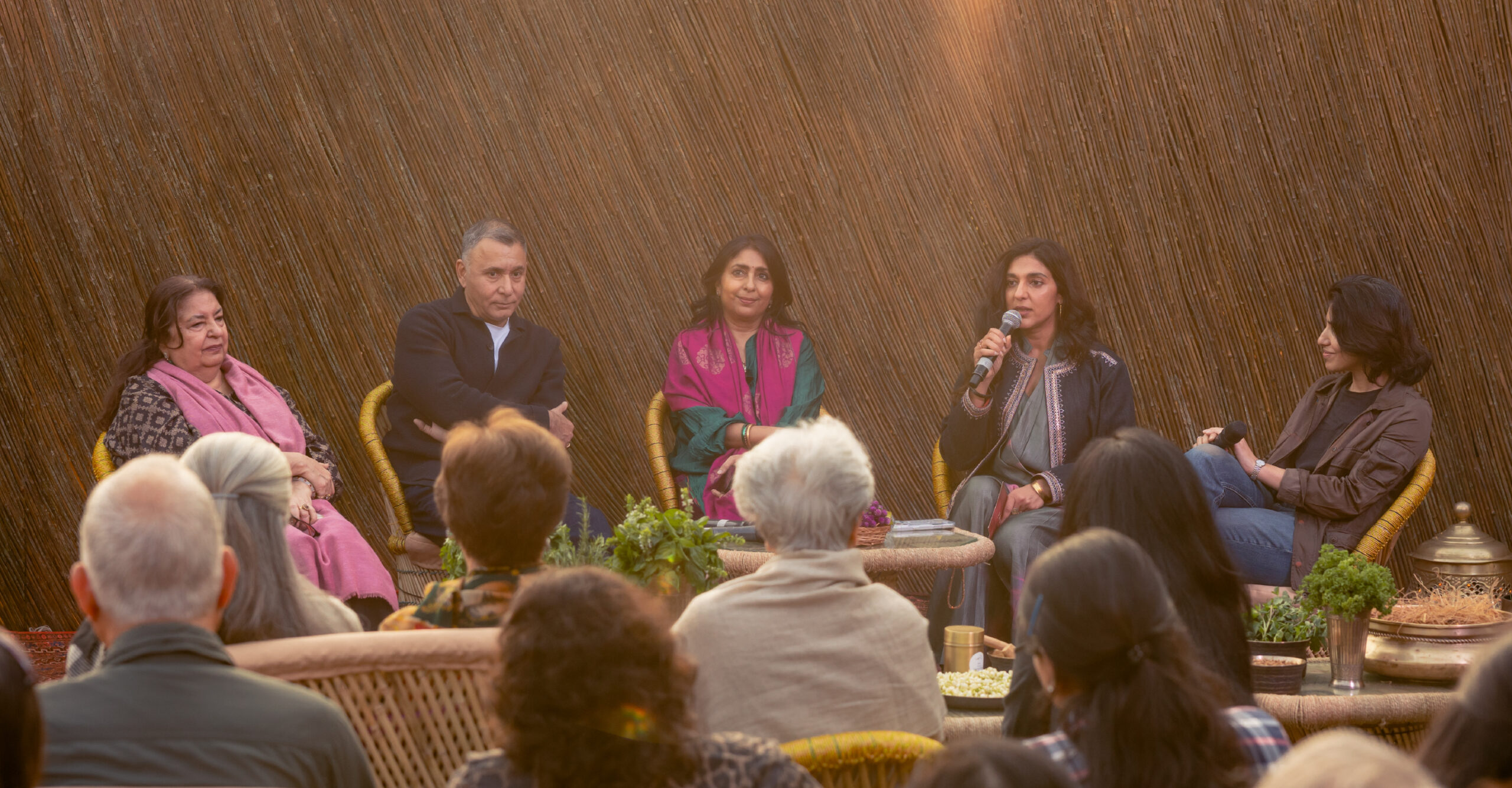
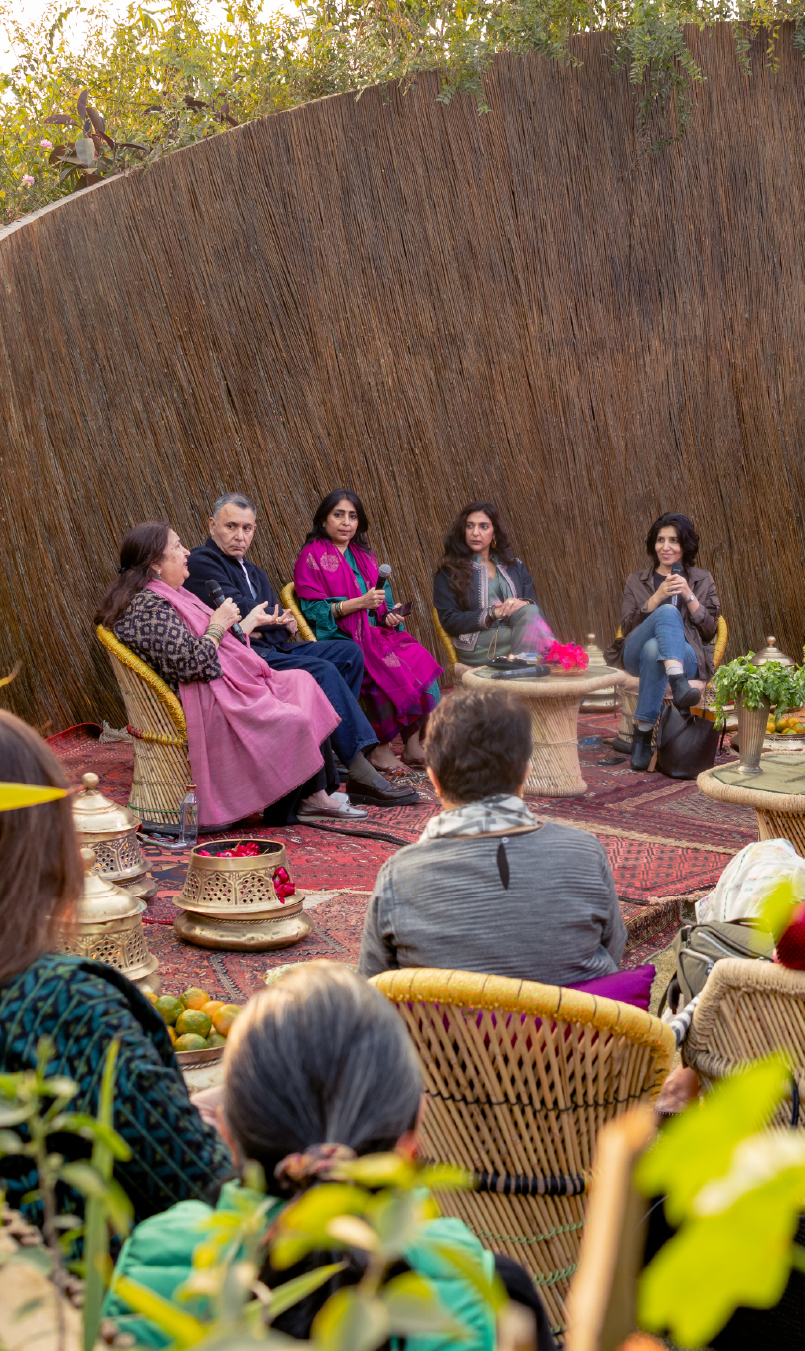
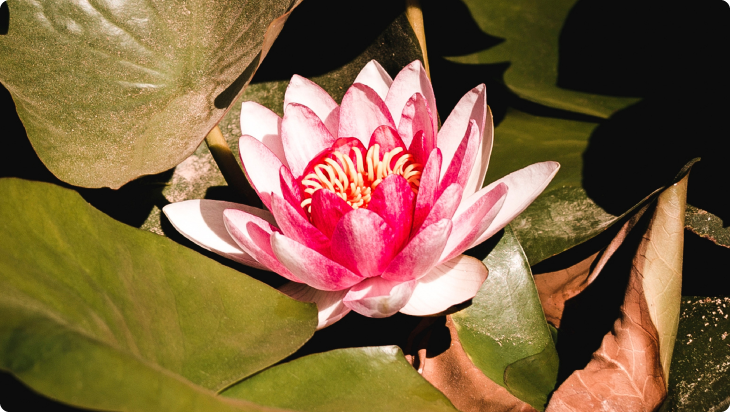
Yet, the panellists agreed that artistry is not exclusive to natural perfumery. Simran Lal, of Nicobar and Paro, acknowledged the creative value of synthetic perfumes while emphasising that India’s spiritual relationship with scent is deeply philosophical. She referenced the five tanmatras of Indian classical thought, which link each sense—including smell—to our awareness. In Indian rituals, fragrance acts as a bridge between the material and the divine. The Mahamrityunjaya mantra, for example, describes Shiva as “Sugandhim,” the fragrant one; offerings of sandalwood, flowers, and jasmine become sacred acts.
India’s fragrant landscape is rich and varied. Jasmine, rose, sandalwood, oud, and vetiver each carry their own stories and uses. Vetiver, or khus, is particularly beloved: though its roots are nearly odourless when dry, they release a cooling, earthy scent when wet, making them a seasonal staple.
Rituals involving scent are woven into daily life. Simran Lal described lighting dhuna in the evening and plucking jasmine at dawn, simple acts that infuse the day with fragrance and meaning. Her bathing routine, for example, changes with the seasons—jasmine in summer, vetiver in monsoon, orange blossom and frankincense in winter—transforming an ordinary bath into a mindful, almost meditative experience. Anita Lal likened bathing with fragrant oils to meditation itself: a moment of peace as scented water pours over the skin.
For Vivek Sahni, creating and testing oils is a constant ritual. Though traditional Ayurvedic oils may lack the sweet scents of commercial perfumes, their herbal aromas carry therapeutic benefits, easing stress and supporting mood over time.
As the discussion turned to practical advice, the panellists advocated for simplicity. Pure lavender or chamomile oils, diluted and applied to pulse points, can calm the mind after a long day. Scented candles, however, were cautioned against; many contain phthalates, which can disrupt hormones, so only those with certified safe ingredients are advisable.
Perhaps the most traditional form of personal scenting is ittar—an oil-based scent distilled from sandalwood. Just a drop behind the ears or on the wrist is enough, offering an intimate fragrance that lingers close to the body.
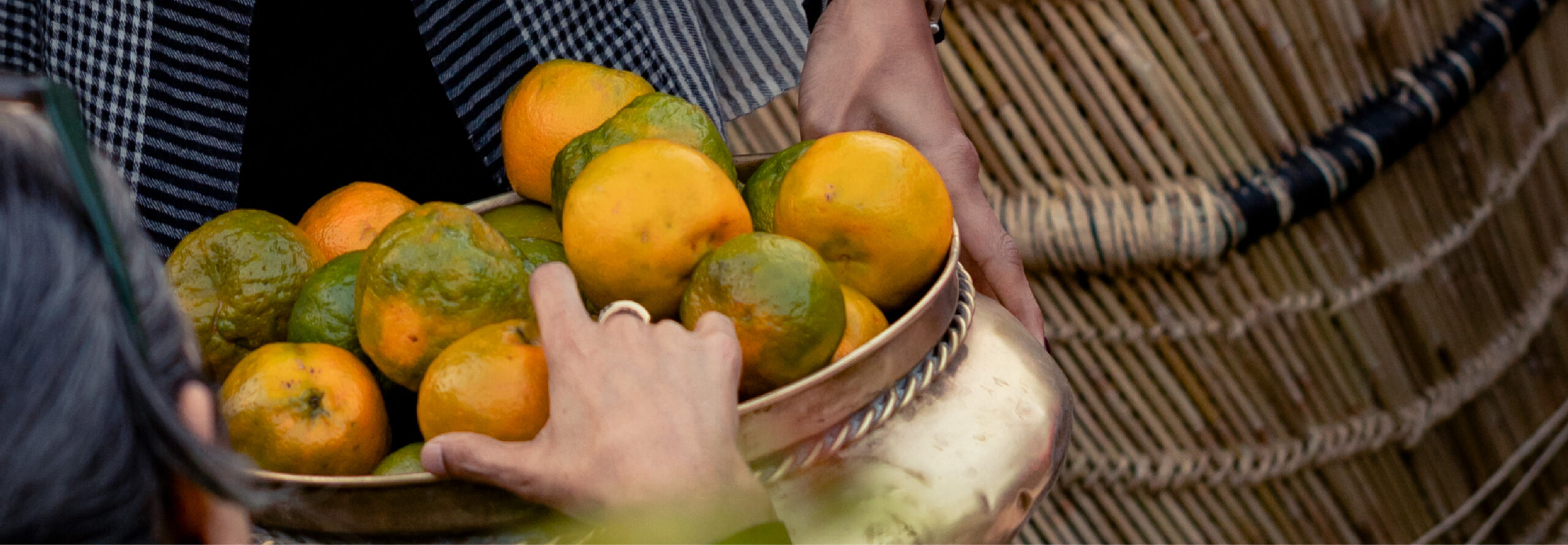
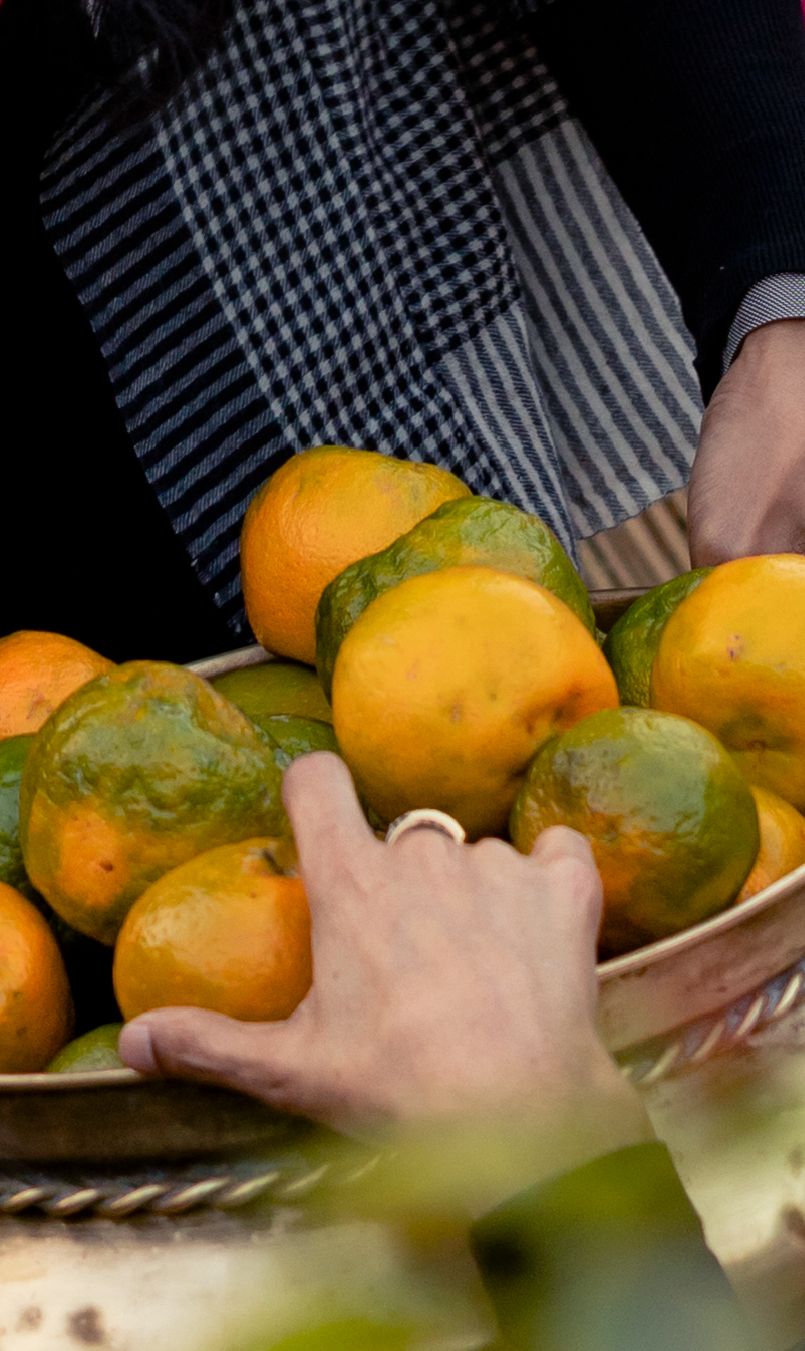
Ultimately, the panel concluded that reconnecting with scent need not be complicated or costly. Whether it’s adding mogra to bathwater, anointing the skin with sandalwood, or simply savouring the aroma of a freshly peeled orange, fragrance offers a path to mindfulness and memory. As Anita Lal put it, a day without fragrance is a day wasted—an invitation to reawaken our oldest, most primal sense.