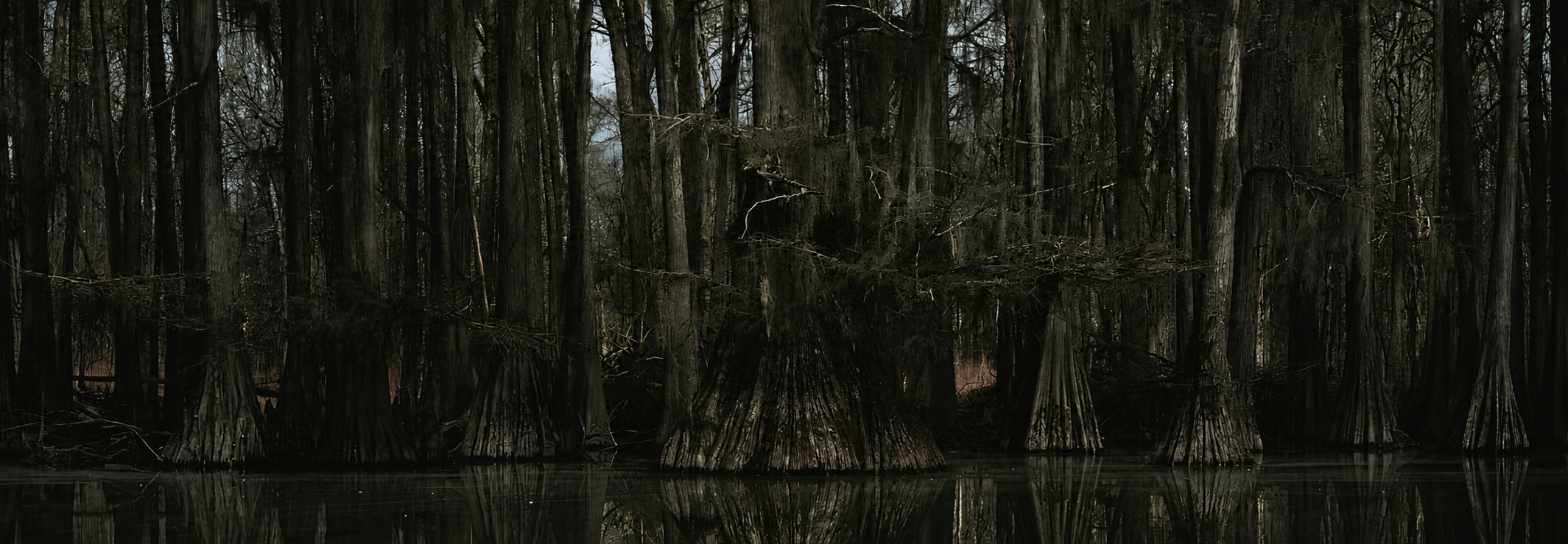
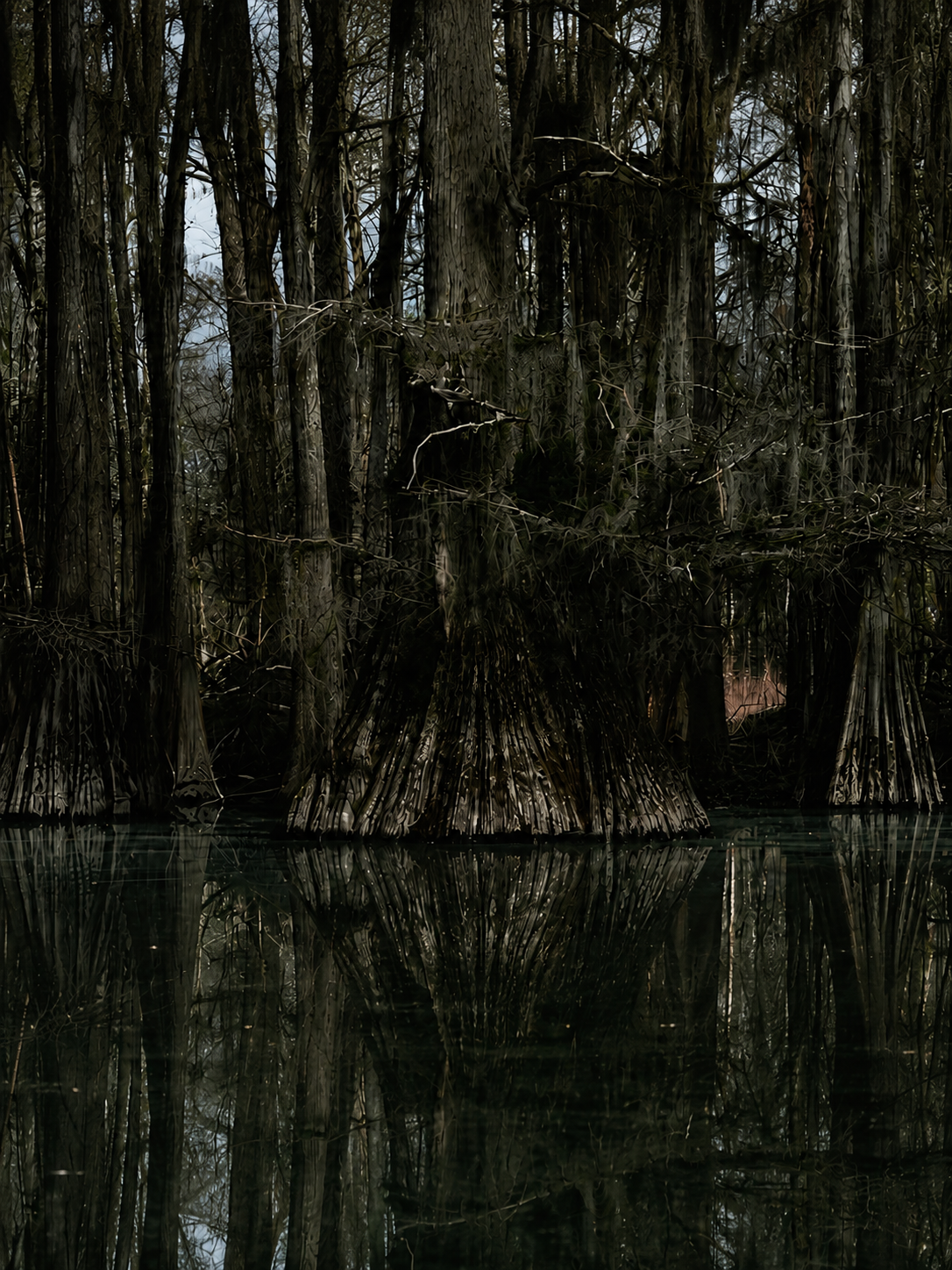
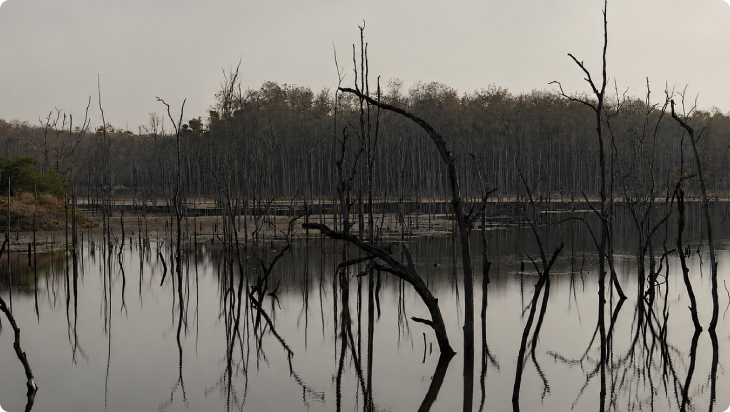
Imagine stepping into a forest so old it predates the dinosaurs, so dense that sunlight has to fight to squeeze through. Welcome to the Myristica swamps, among the Western Ghats’ most mysterious and ancient ecosystems. These freshwater swamps are true hotspots for biodiversity conservation. Trees from the Myristicaceae family have developed quirky stilt and knee roots that poke bravely above the swampy ground. These forests once stretched across the Ghats, but now survive in scattered patches across Maharashtra, Goa, Karnataka, and Kerala. Each patch is packed with rare and threatened wildlife.
This ecosystem is pretty unique, and unfortunately, pretty threatened too. Researcher Priya Ranganathan once called them “tree-covered wetlands living within the evergreen rainforests of the Western Ghats.” The first time anyone officially wrote about these swamps was back in 1960, when Krishnamoorthy found them in Kerala’s Travancore forest. Ranganathan even calls Myristica swamps the “rarest wetland ecosystem” in all of India.
With a steady year-round supply of water, these swamps act like natural watersheds and do a ton of important jobs, like soaking up carbon, preventing floods, recharging groundwater, and cleaning water. That’s big for people and for wildlife. New species unique to these swamps are still being discovered, and they’re a haven for rare creatures like hornbills, lion-tailed macaques, and dancing frogs. Myristica swamps illustrate how ecological restoration and forest conservation can protect threatened species. Believe it or not, Myristica swamps make up just 0.004% of Kerala’s land area, but they’re home to 16.3% of all the endemic species in the Western Ghats!
While some of these pockets are tucked away in reserves or protected forests, quite a few are actually closer to where people live. They’re kept safe as sacred groves, a traditional form of biodiversity conservation found across India, called devrai in Maharashtra, kavu in Kerala, and kans in Karnataka. Every state has its own customs and festivals, but the common thread is treating the land as sacred and keeping human activity to a minimum.
Ranganathan traces the story of these sacred swamps back to when farming first took off in the Western Ghats some 3,000 years ago. People looked after the water sources that kept them alive and slowly began to see them as sacred, eventually weaving them into culture and tradition. Many of the local deities are linked to water, forests, snakes, and tigers.
Before temple idol worship was a thing, these deities were often just stone carvings placed by a swamp or under a big tree. Even today, at many sites, it’s frowned upon to take things like leaf litter or seeds, to walk in with shoes on, or to let outsiders in. Talk about conservation through sacredness.
Sadly, there isn’t yet a study that tells us exactly how many sacred swamps remain in the Ghats. But when Narasimha Hegde and others compared a sample size of sacred and non-sacred Myristica swamps in Uttara Kannada (Karnataka), they found that the sacred swamps had greater biodiversity and more endemic species. In Maharashtra, the latest and only the second ever Myristica patch was actually found inside a sacred grove in 2024.
But, as with most things in a country as diverse as ours, it’s not all black and white. Not every custom helps protect these sacred swamps. In Hewale, Maharashtra, for instance, the tallest tree in the sacred swamp is cut down every year for the Shimga (Holi) festival. Even though local researchers are growing new trees in a nursery, researcher Saili Palande-Datar’s worry is that the reduction in the canopy could change the swamp’s whole ecosystem. Still, Palande-Datar says it’s thanks to the locals’ protection that the Myristica swamp has lasted this long.
As times change and more people move away from traditional practices, these sacred forests face new threats. Today, ecosystem restoration and ecological restoration efforts are becoming vital for protecting these sacred groves and freshwater swamps. Will these ancient forests withstand modern life and shifting customs? Only time will tell.