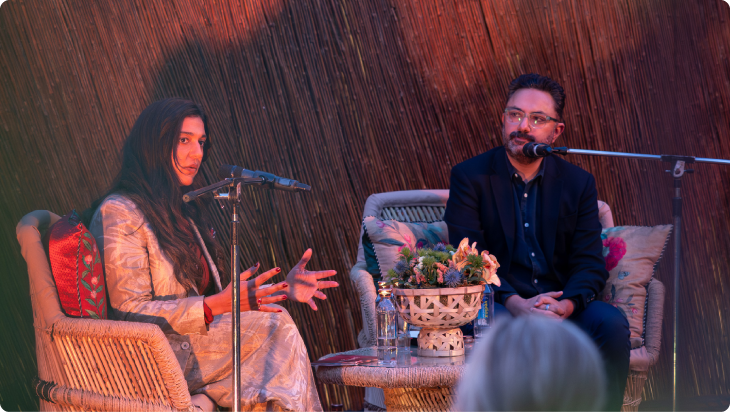
A panel of four leaders agree the answer lies somewhere between corporate reawakening, policy changes and a little bit of citizen action
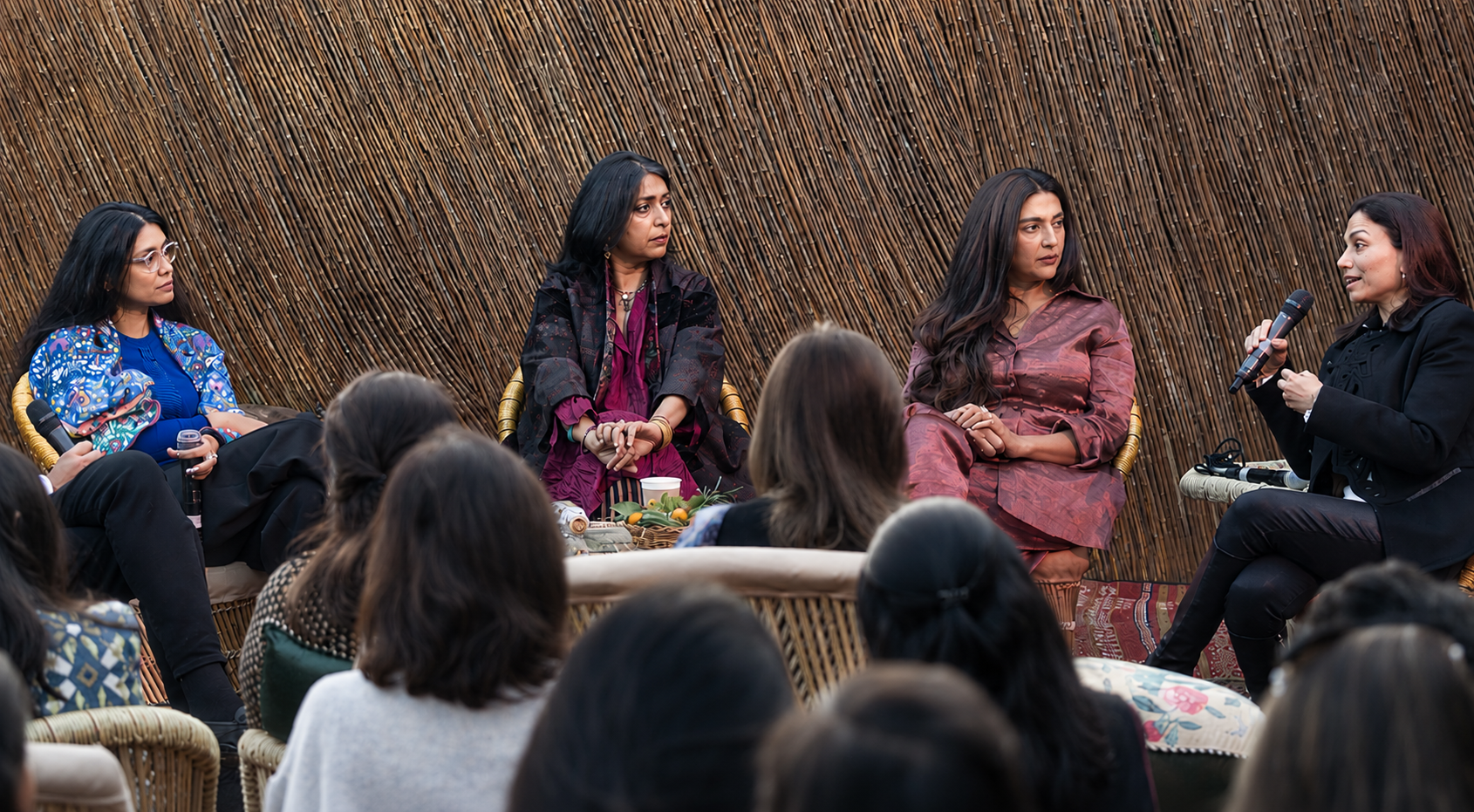
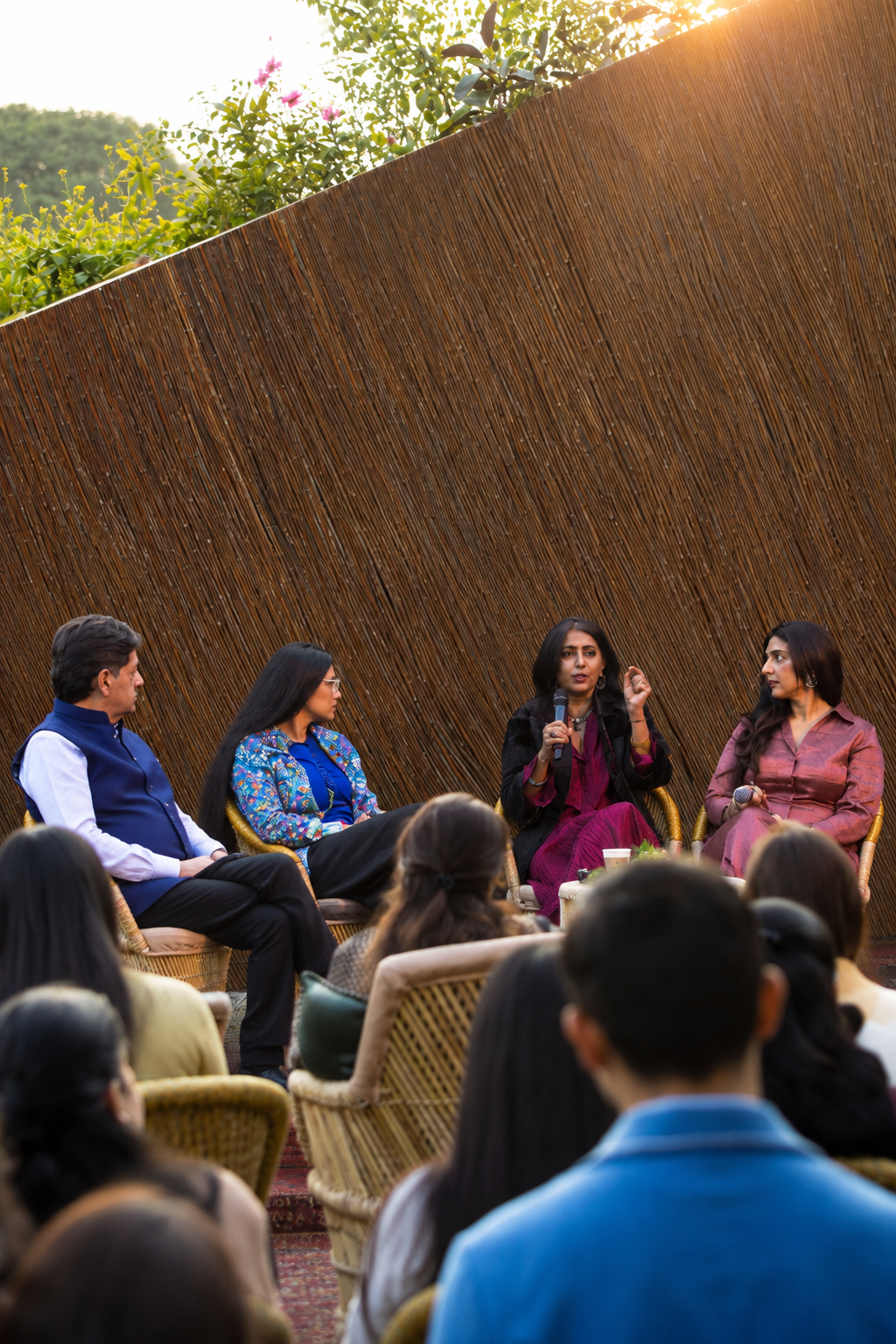
As India’s cities grow and its air grows harder to breathe, the question of who will lead the country toward a greener future becomes more urgent than ever. At a recent panel, four women—Nyrika Holkar (Executive Director, Godrej Enterprises Group), Roshni Nadar Malhotra (Chairperson, HCLTech), Tara Lal (Founder, Aranyani), and Simran Lal (Co-founder, Nicobar)- offered a blueprint for the next era of Indian ecological leadership.
For Nyrika Holkar and Godrej & Boyce, sustainability is not a corporate buzzword, but a legacy. Decades ago, her grand uncle Soli Godrej protected the mangroves outside their Mumbai factory, a decision seen as eccentric at the time. Now, as wetlands vanish across India, his foresight looks prophetic. “Sustainability has never been a separate metric for us,” Holkar says. “It’s embedded in everything we do.” This blend of business performance and ecological stewardship has allowed their lands to not only survive, but thrive—a model for Indian industry.
The private sector’s influence is clear in urban regeneration, too. Roshni Nadar Malhotra, who leads HCL Tech, has seen firsthand how young people’s environmental passion can be channelled into real-world change. “This generation cares,” she observes, but “the challenge is to convert that energy from online to in-person.” She points to Sundar Nursery in Delhi, once a wasteland, now a bustling green space, as proof that creating urban oases can spark a virtuous cycle of community investment.
Malhotra’s own experience in Noida is telling: on paper, the city had 1,200 lakes, but most were choked with waste. HCL took on the task of reviving some, and within a few years, wetlands returned, and communities flourished. “People underestimate how quickly nature can rebound if given the chance,” she says.
But, as conservation scientist Tara Lal points out, ecological change isn’t only about institutions. “Conservation is really about human behaviour,” she says. While she was once told that only scientists belonged in the field, Lal argues that everyone can contribute—by planting native flowers, picking up trash, or simply caring for their local environment. Change begins with small, consistent actions.
Still, systemic impact requires more than goodwill. Holkar warns that public-private environmental projects must be rooted in indigenous knowledge. Over 60% of rewilding efforts fail when local expertise is ignored, she notes. “We need to draw on the wisdom of our indigenous communities,” who know which species thrive together and how to ensure genuine regeneration.
Yet, even when money is available, ecological restoration is slow work. “Unlike education or healthcare, where you see results quickly, nature takes time,” Malhotra cautions. Perhaps the bigger challenge, though, is the lack of viable career paths in conservation. Lal laments that conservation receives the least philanthropic money, despite affecting every Indian. She and others propose creating national fellowships to fund and train the next generation of ecological leaders—making environmental stewardship a respected and sustainable livelihood.
Simran Lal, meanwhile, believes fostering an emotional connection to nature is key. Through Nicobar’s immersive programs in the Nilgiris, she aims to turn young people into stewards, not bystanders. “We’re building hands-on experiences for kids who’ve never learned about the biodiversity right outside their doors,” she explains.