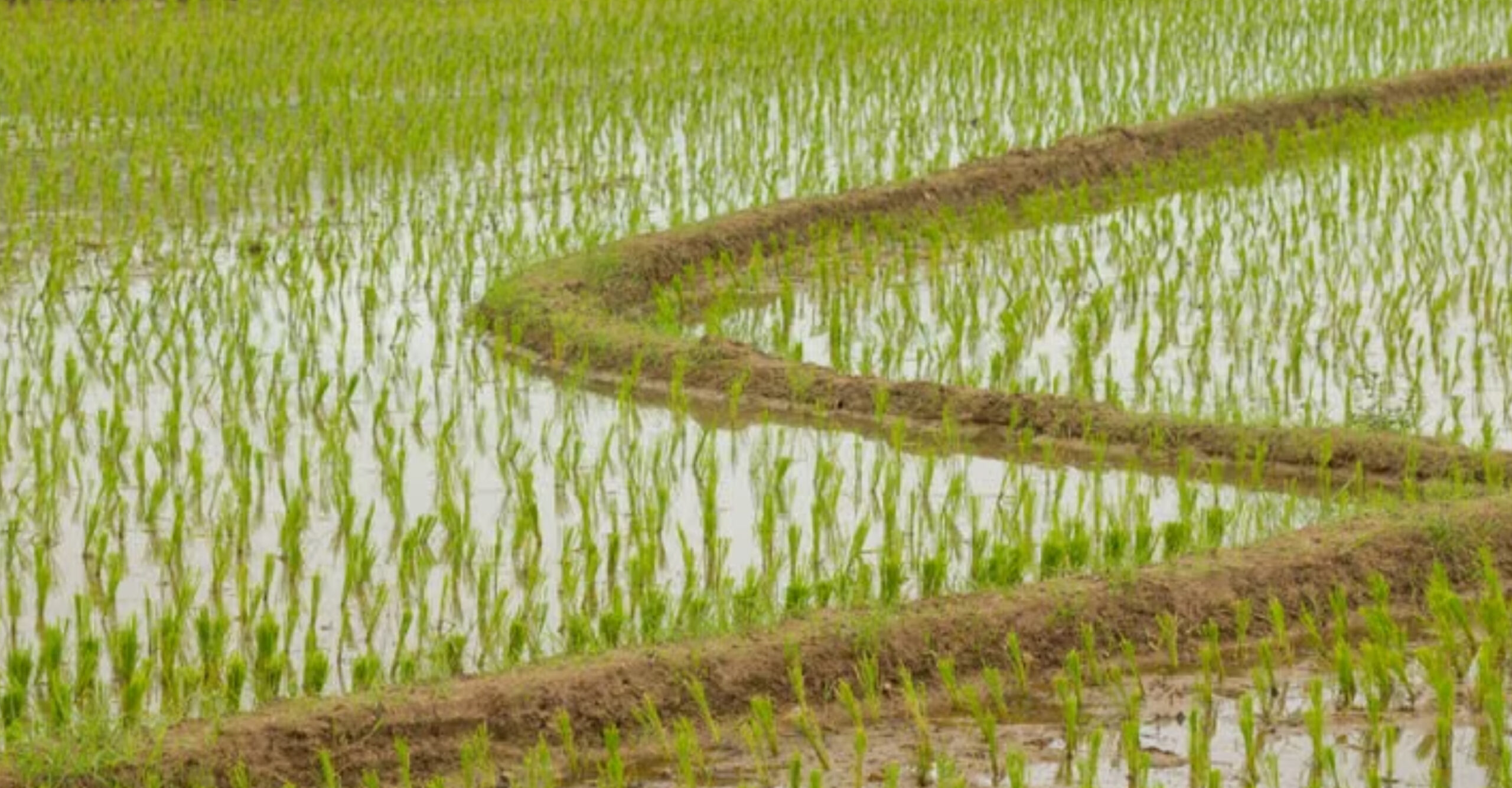
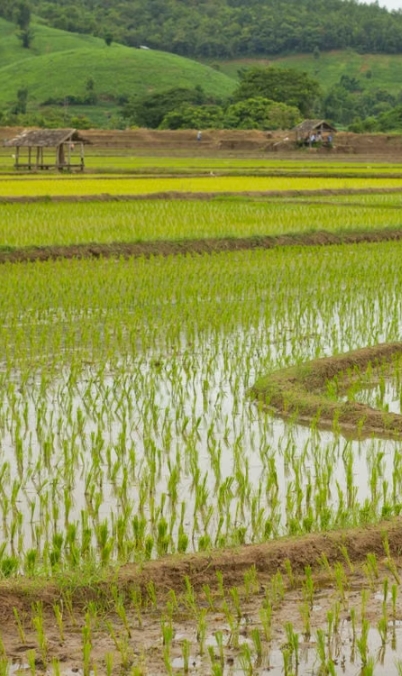
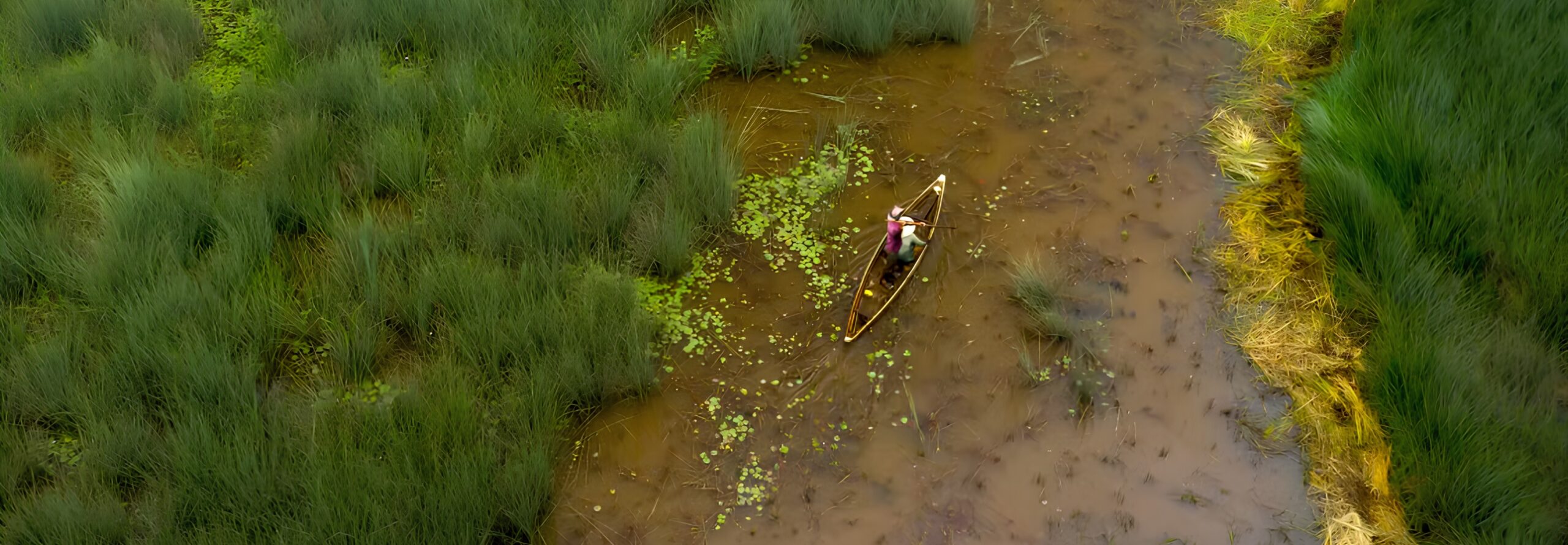
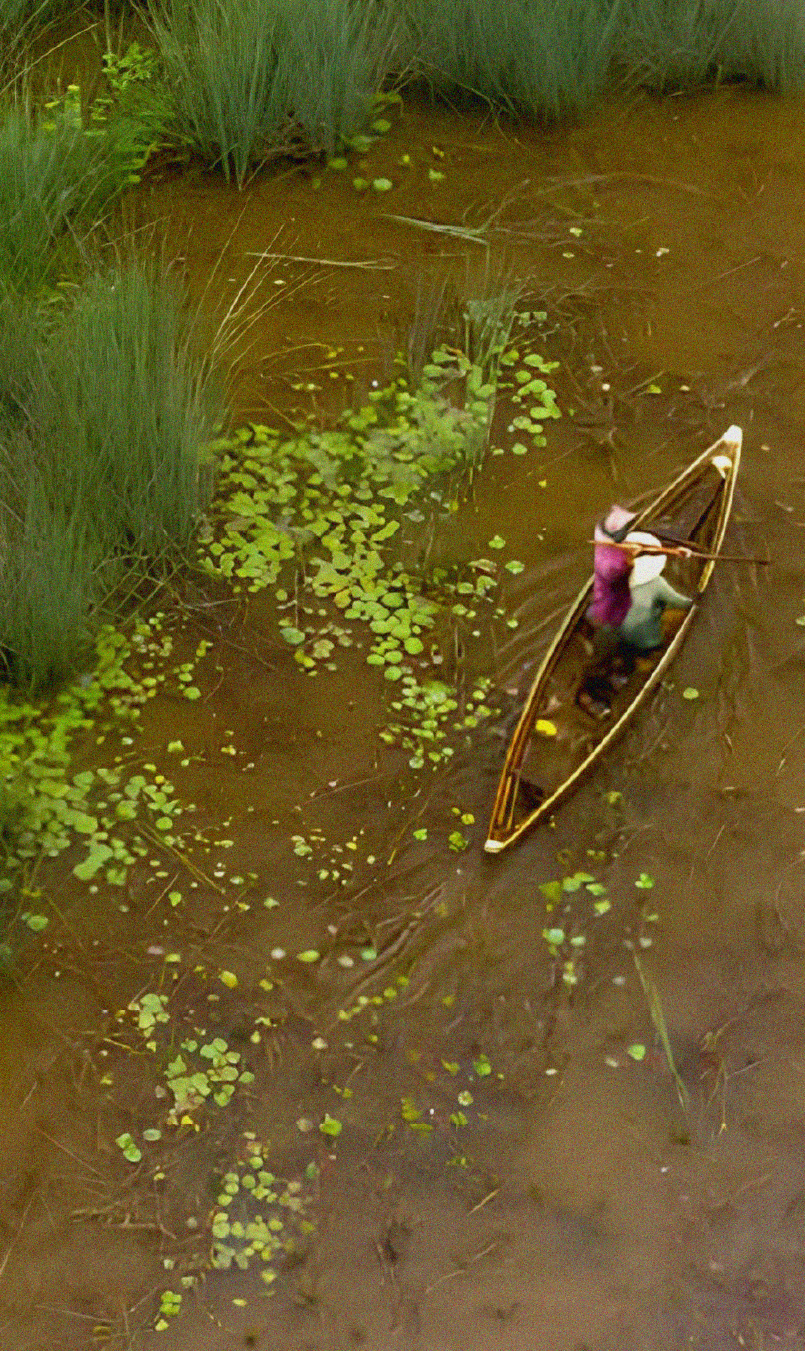
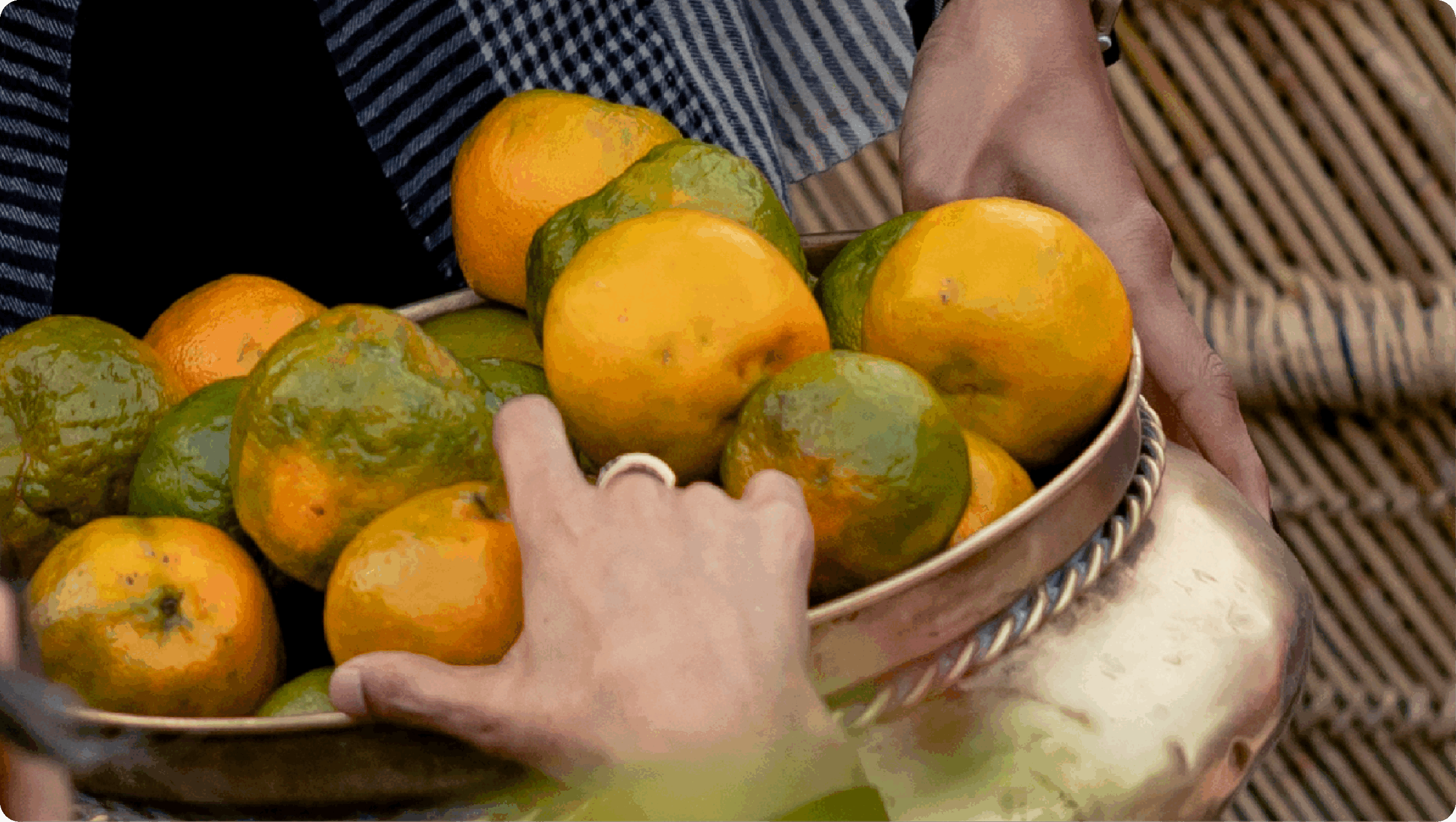
A flat land segmented by soil-and-rock bunds. Come closer and witness farmers wading through the perennially waterlogged fields—knee-deep, waist-deep. Depending on the time of year, what they seek changes: rice in the monsoon when the rains wash away the salt in the fields, and prawns in the drier months. The farmers plod through the shifting earth, which congeals into clay, dark and pale-blue depending on the buzzing acid-sulphate sediments.
This scene unfolds across the coastal wetlands of central Kerala, principally across three districts: Ernakulam, Thrissur and Alappuzha. The word Pokkali comes from pokkam (height) and aali (plant), referring to how tall the rice stalks end up growing, nearly two metres. Despite a Geographical Indication tag in 2008, Pokkali remains little known and rarely adopted, unlike West Bengal’s Gobindobhog or Maharashtra’s Indrayani. Yields are low, harvesting is labour-intensive, and many landowners skip rice for the more profitable prawn season.
The turning point came with tragedy: during the 2018 Kerala floods, most crops were devastated, but some Pokkali fields survived. Even as some areas reported disease, Pokkali’s reputation as a resilient rice was reaffirmed. For decades, families in central Kerala have used Pokkali in prawn curry and kanji, and to make appams and idiyappams. Aswin Prakash, founder of Monsoon Culture, recalls, “The end of the summer vacation would coincide with the arrival of the monsoon with its boisterous rains. The water would often reach the threshold of our house, and we’d often fish for prawns from the porch of our house.”
The Kerala floods revived interest in Pokkali, prompting the Rice Research Station at Vyttila to address its limitations. Dr A.K. Sreelatha explains, “It is bred from Pokkali lines for higher yield while keeping salt tolerance. It will yield five to six tonnes per hectare, and the height is not so much. Our varieties are high-yielding and non-lodging, and they also have the qualities of salinity resistance and the taste of the traditional varieties.”
Pokkali’s resilience was proven again after Cyclone Amphan in 2020, when Vyttila-11 rice was sent to the Sundarbans. “They got a very good crop yield in the Sundarbans,” Sreelatha says. “I’m just very happy for us, because we have the same type of climate, the same type of land here in Kerala—coastal saline.”