The Great Migration
PUBLISHED
July 2, 2025
WORDS
Arjun Krishnan
PHOTOGRAPHY
Tara Lal
When we think of migration, we often picture a straight line from one place to another. But in the wild, it’s not a journey with a beginning or an end, it’s a cycle, ancient and ongoing. Few things capture this rhythm of nature more powerfully than the Great Migration of East Africa’s wildebeest.
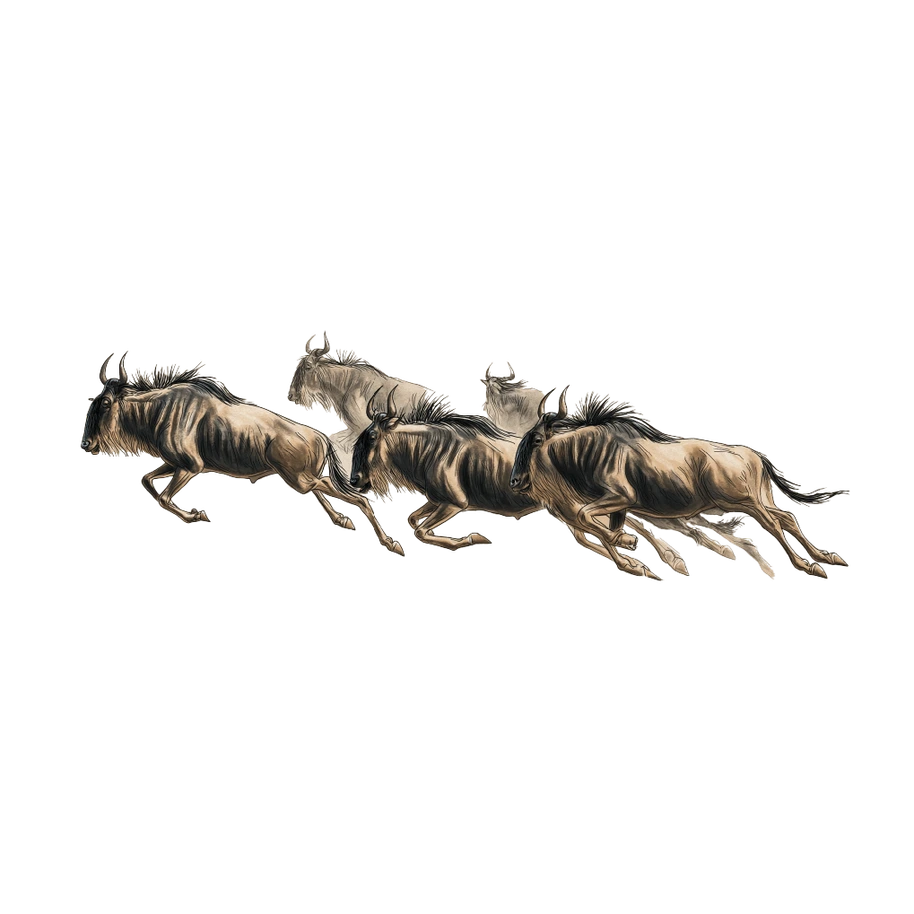
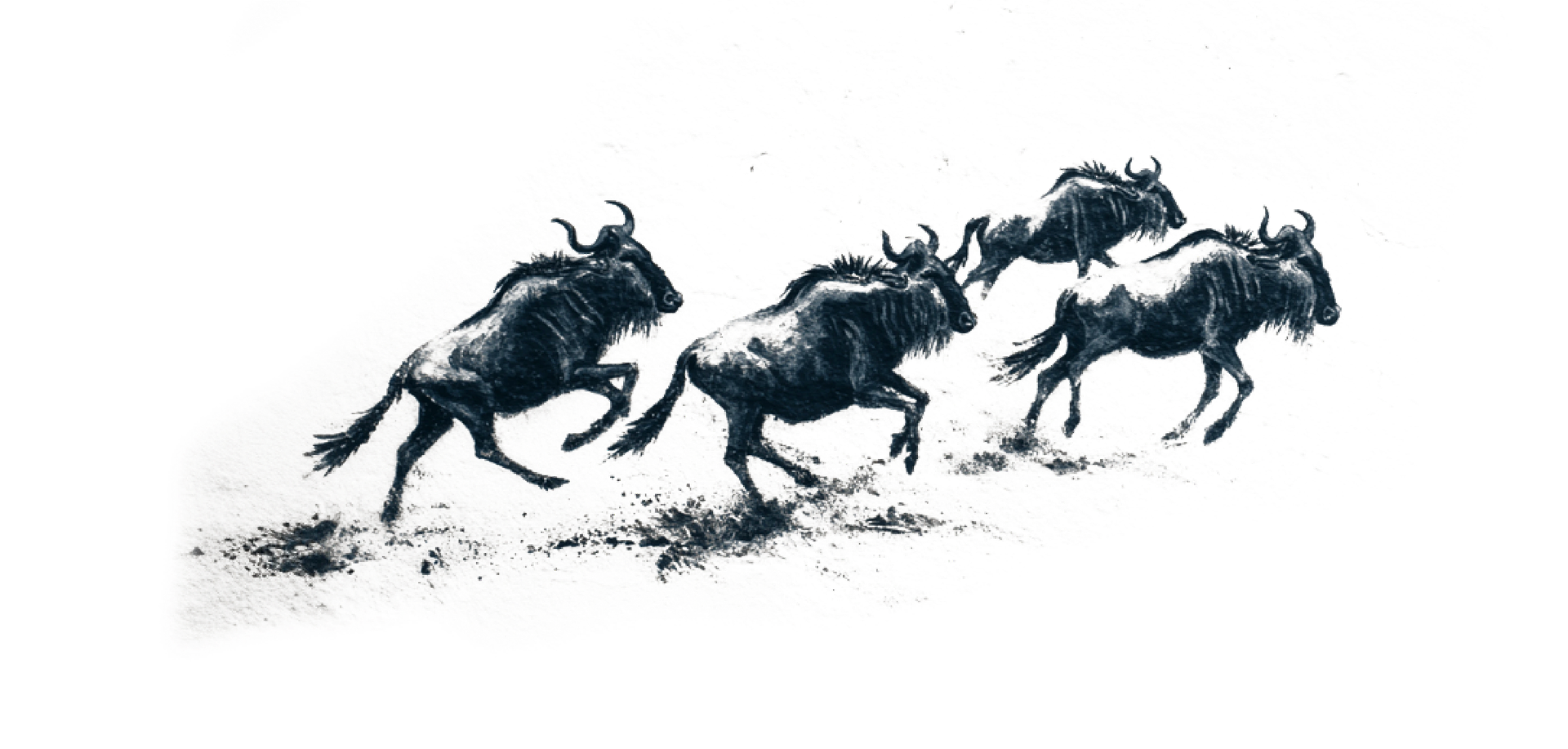
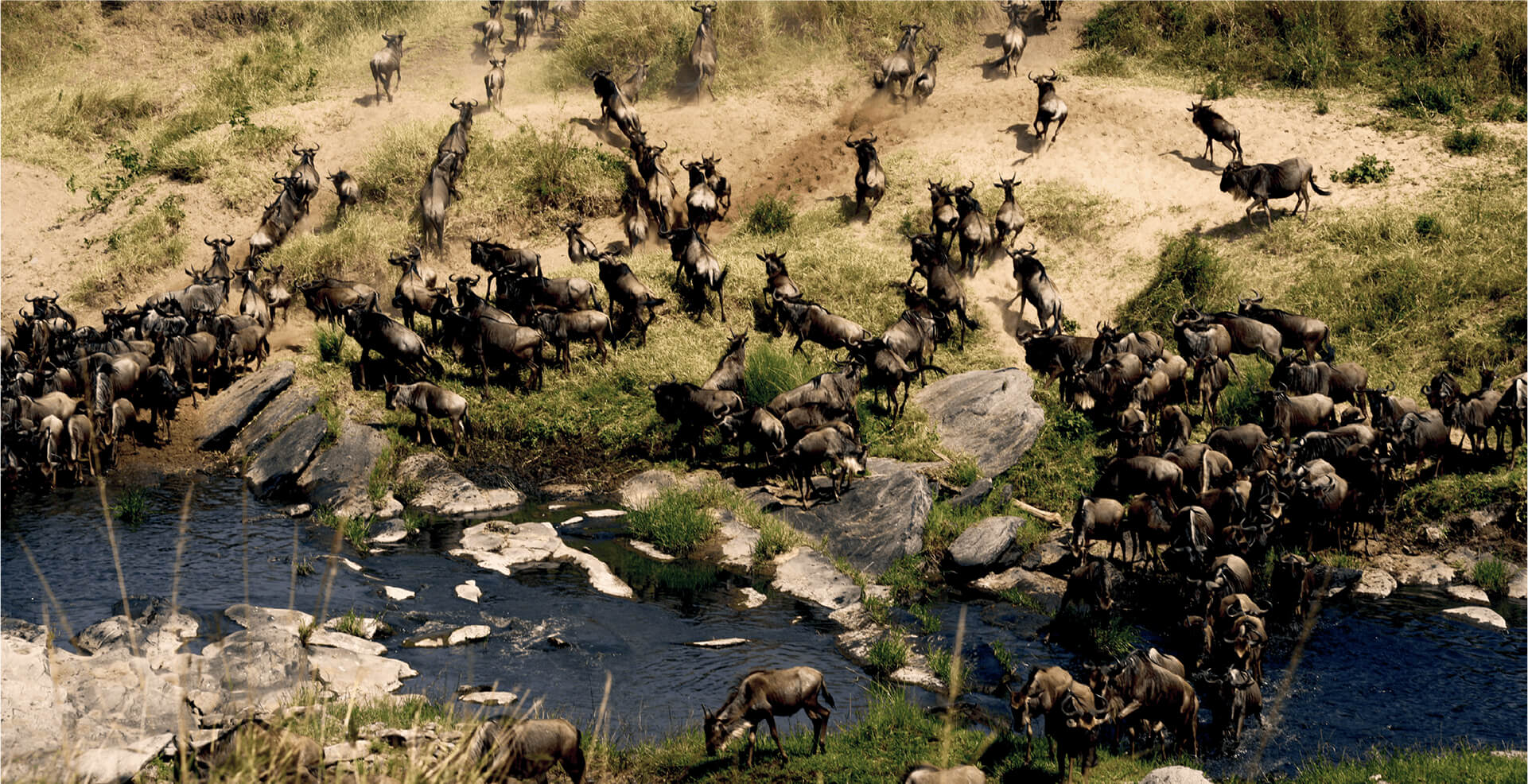
Every year, over a million wildebeest, along with zebras and gazelles, move in a vast, tireless loop across Tanzania’s Serengeti and Kenya’s Maasai Mara. They are driven not by maps or borders, but by instinct and rain—chasing fresh grass and the promise of survival.
The cycle loosely begins in the southern Serengeti, where the rains arrive between January and March. The land turns green and soft, and it becomes the birthplace of new life. Thousands of calves are born within a few short weeks wobbly, wide-eyed, and learning quickly that in the wild, growing up can’t wait.
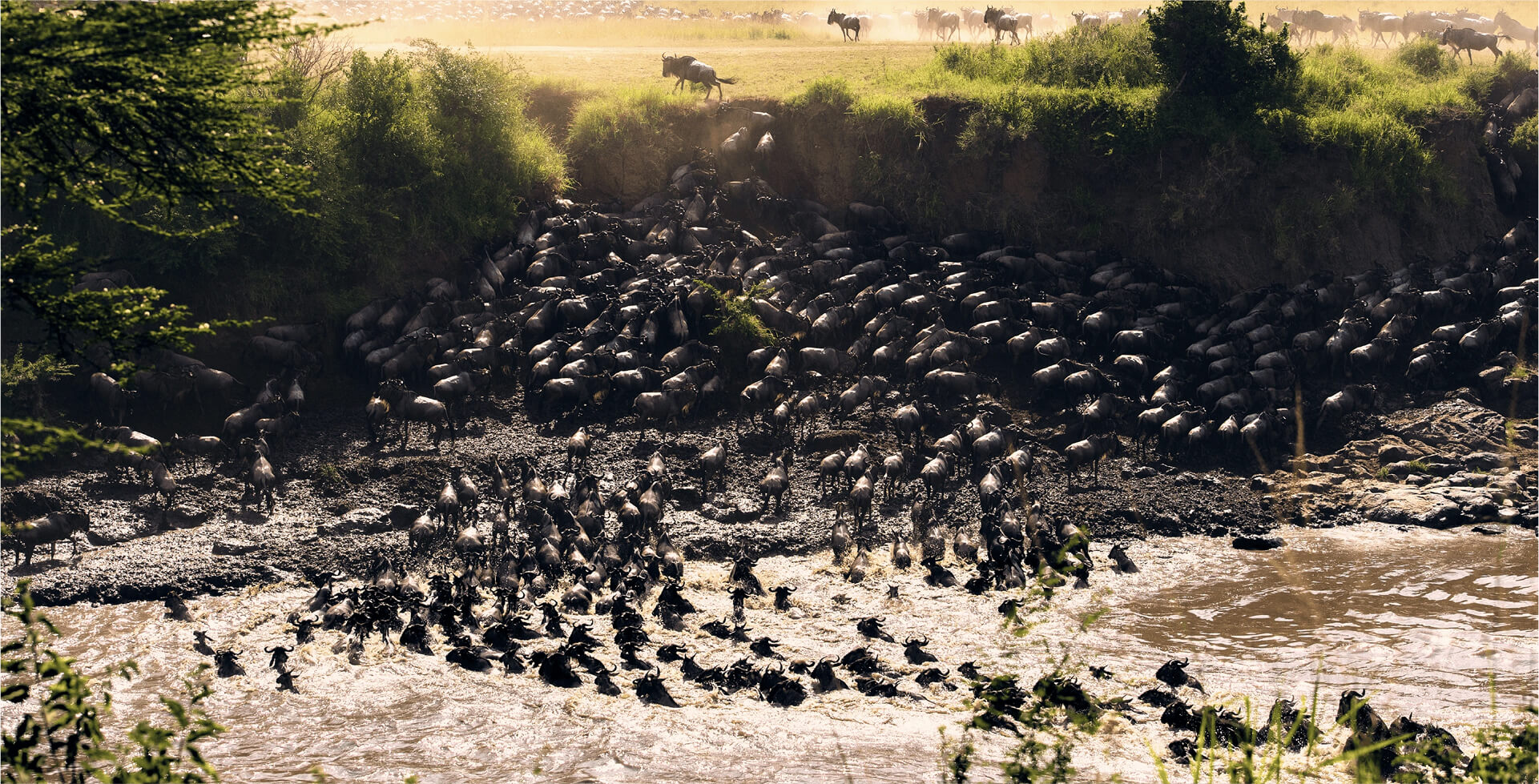
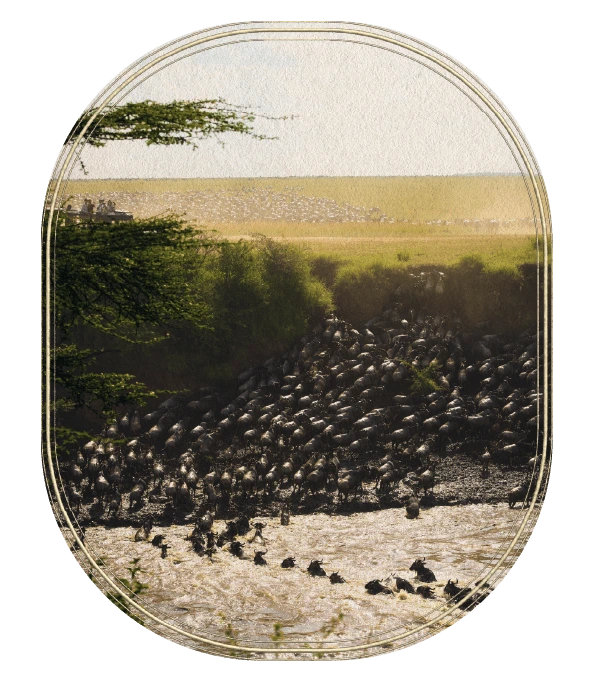
By May, the rains taper off, and the herds begin to move. They head northwest toward the Grumeti River. Here, the journey becomes dangerous. Crocodile-filled rivers must be crossed, and every splash is a gamble. It’s a time of high drama, of close calls and quiet losses.
Come June and July, the herds reach the Mara River and press into Kenya’s Maasai Mara, drawn by its rich grasslands. They spread across the plains, feeding and resting. But even this brief calm carries its risks. Predators follow the herds lions, hyenas, leopards, and cheetahs, all part of the same pulse of life and death.

In October, as the rains return to the Serengeti, the wildebeest begin their journey back south. The return is just as perilous, as rivers must be crossed once more and food becomes scarce. Still, they move on driven by the same rhythm that brought them here. By the time they arrive back in the Serengeti, calving season is near again. And so, the circle begins anew.
This great movement is more than a spectacle. It’s the beating heart of the Serengeti-Mara ecosystem. The herds keep the grasslands trimmed and healthy, allowing plants to thrive and other species to flourish. Predators depend on them. Scavengers follow their trail. Even the pastoral communities who live across these plains have long shaped their lives around the migration’s timing.
In a world increasingly disconnected from the natural cycles around us, these migrations remind us that movement is life. That to shift with the seasons, to read the rain, to follow where sustenance leads is to be in tune with something older than civilization itself.
The Great Migration is about alignment. With the earth, with the sky, with the invisible maps written into instinct. And maybe it holds a quiet lesson for us too: that we are not so separate. That somewhere deep within, we also carry a memory of rhythm. A need to move, to adapt, to return. To keep finding our way through a changing world—one season, one step at a time.
The Great Migration is about alignment. With the earth, with the sky, with the invisible maps written into instinct. And maybe it holds a quiet lesson for us too: that we are not so separate.