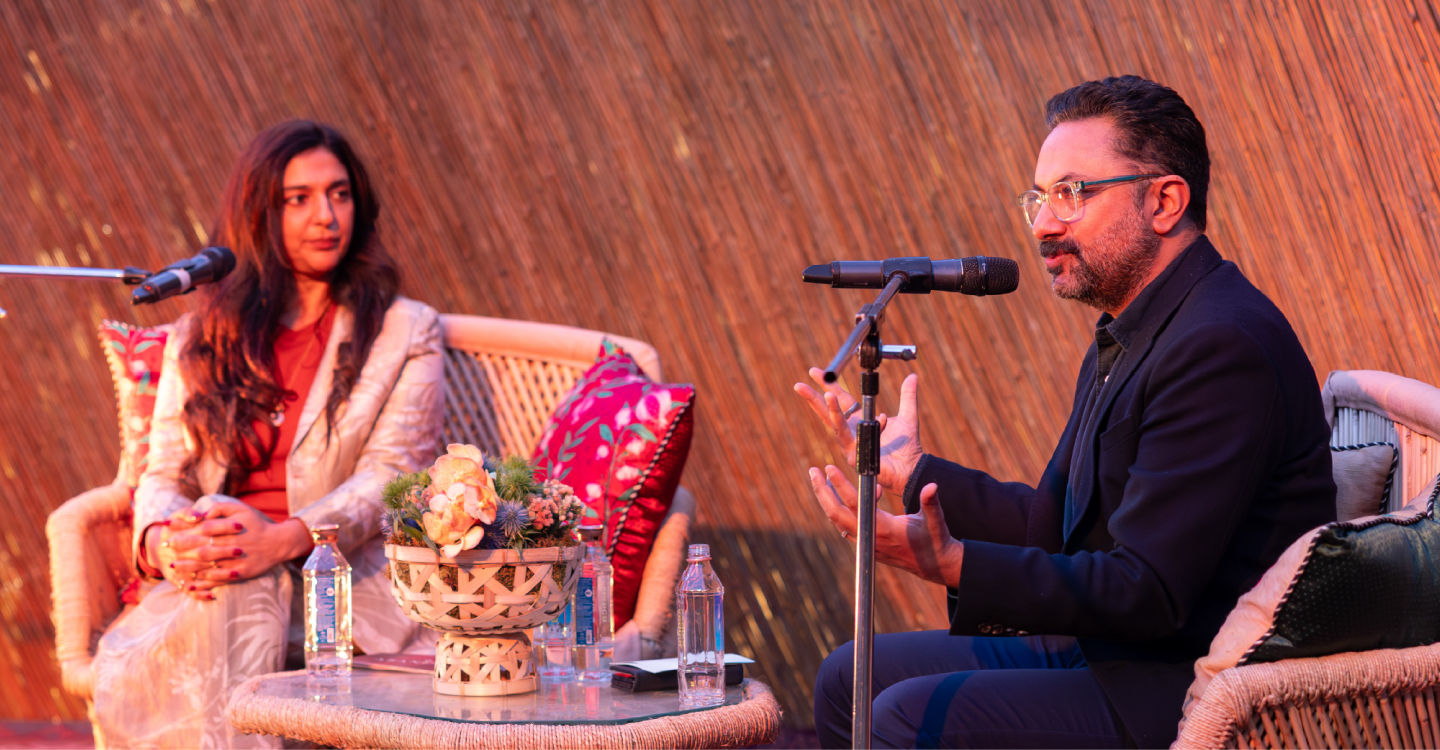
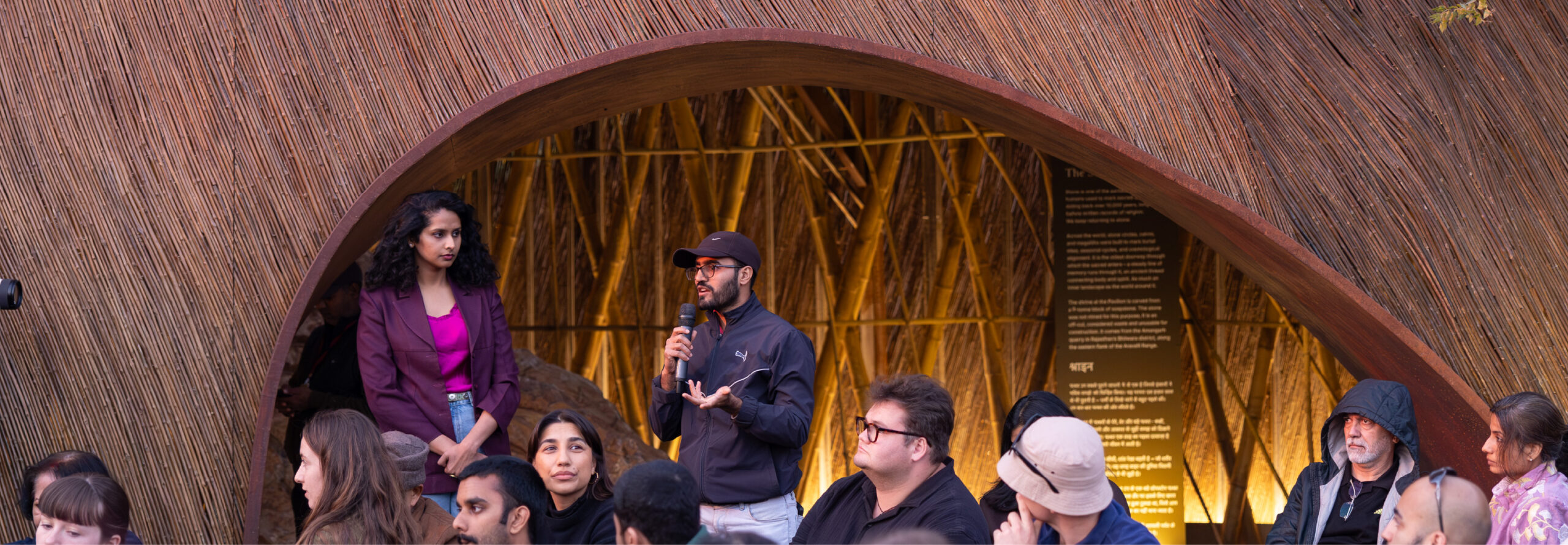
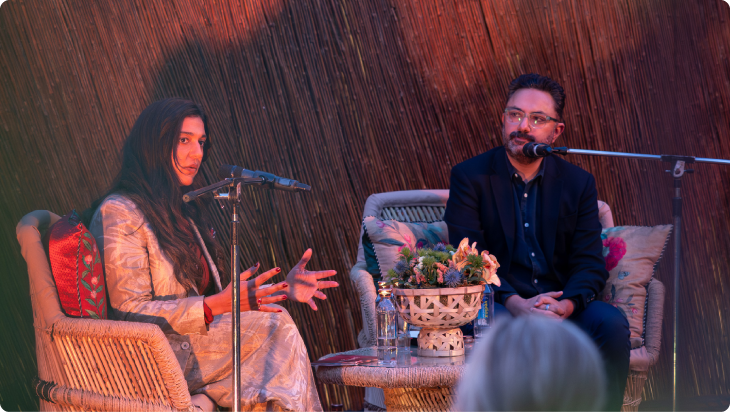
UK-based author Sathnam Sanghera talks to Arayani founder Tara Lal about Churchill, cinchona and the common omissions from colonial history that lead us to the future solutions
The British Empire’s legacy is still deeply felt—shaping not just politics and economies, but the natural world itself. In a conversation, award-winning British journalist and author Sathnam Sanghera and Aranyani founder Tara Lal explored how colonial history has left lasting marks on landscapes, ecologies, and society, and why education about these legacies is crucial for navigating today’s climate crisis.
Lal opened the dialogue by reflecting on the “decolonial school of nature” that inspired her work. She described how colonialism transformed environments across India, even in iconic places like Sundar Nursery. Sathnam Sanghera agreed, noting that British imperialism has fundamentally shaped cities like New Delhi—its language, its avenues, its very existence. Plants introduced by the British, such as lantana, now overwhelm vast tracts of Indian forests, illustrating how botanical decisions were as consequential as political ones.
The discussion moved beyond India. Around the globe, the British established botanical gardens as sites of colonial power, from Singapore to Mauritius to London’s Kew Gardens. These gardens provided plants for plantations—sugar, tea, cinchona, and rubber—all crops that dramatically altered local ecologies and economies.
Sanghera pointed out that the Empire’s botanical pursuits drove the creation of monocultures, led to environmental disasters, and were often connected to forced labour and slavery. For example, the demand for sugar in Britain turned Barbados into a plantation economy, devastating its soil and ecology.
Both Lal and Sanghera highlighted the devastating impact of colonial agriculture: New Zealand lost 60% of its forests, and in places like Sri Lanka and Barbados, monoculture plantations led to long-term ecological crises. Sanghera stressed that understanding these histories is essential to understanding contemporary conflicts and environmental
issues—many of today’s disputes, he argued, have roots in imperial history.
Education, however, rarely covers these stories in depth. Sanghera reflected on his own schooling—despite a first-class degree from Cambridge, he learned almost nothing about the British Empire. This gap, he said, is common, and many people are now educating themselves later in life. Lal echoed this, describing her own awakening while researching wildlife in Madagascar, where former forests are now dominated by plantations, and ring-tailed lemurs survive only in sacred groves.