Arctic Terns and the Endless Summer: Nature’s Great Migration Story
PUBLISHED
May 1, 2025
PHOTOGRAPHY
Rohit Singh
WORDS
Arjun Krishnan
LOCATION
Southern Iceland
Arjun is a wildlife enthusiast by nature and a lawyer by profession
Sometimes I find myself thinking about what it would be like to live in constant motion. To follow the sun, to always stay a step ahead of the changing seasons. To live a life where summer never ends. The Arctic Tern does just that. Their journey is a testament to the boundless reach of nature’s rhythms, a reminder that some creatures live in perpetual motion, never settling, always chasing the light. In their wings, we see a world where borders dissolve, and the earth is one vast, interconnected expanse. Almost as if we see that endurance is not just survival but a way of being. It makes me wonder—maybe, in some quiet way, we all share that same pull towards the light, the instinct to keep moving, to find places where life feels a little warmer, a little more alive.
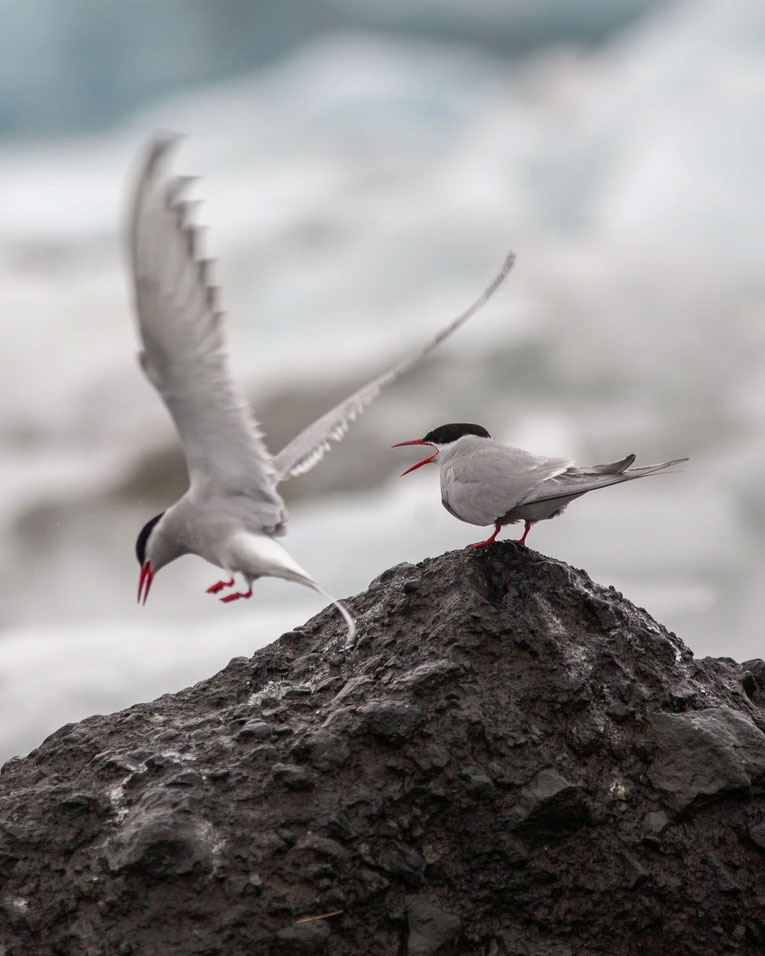
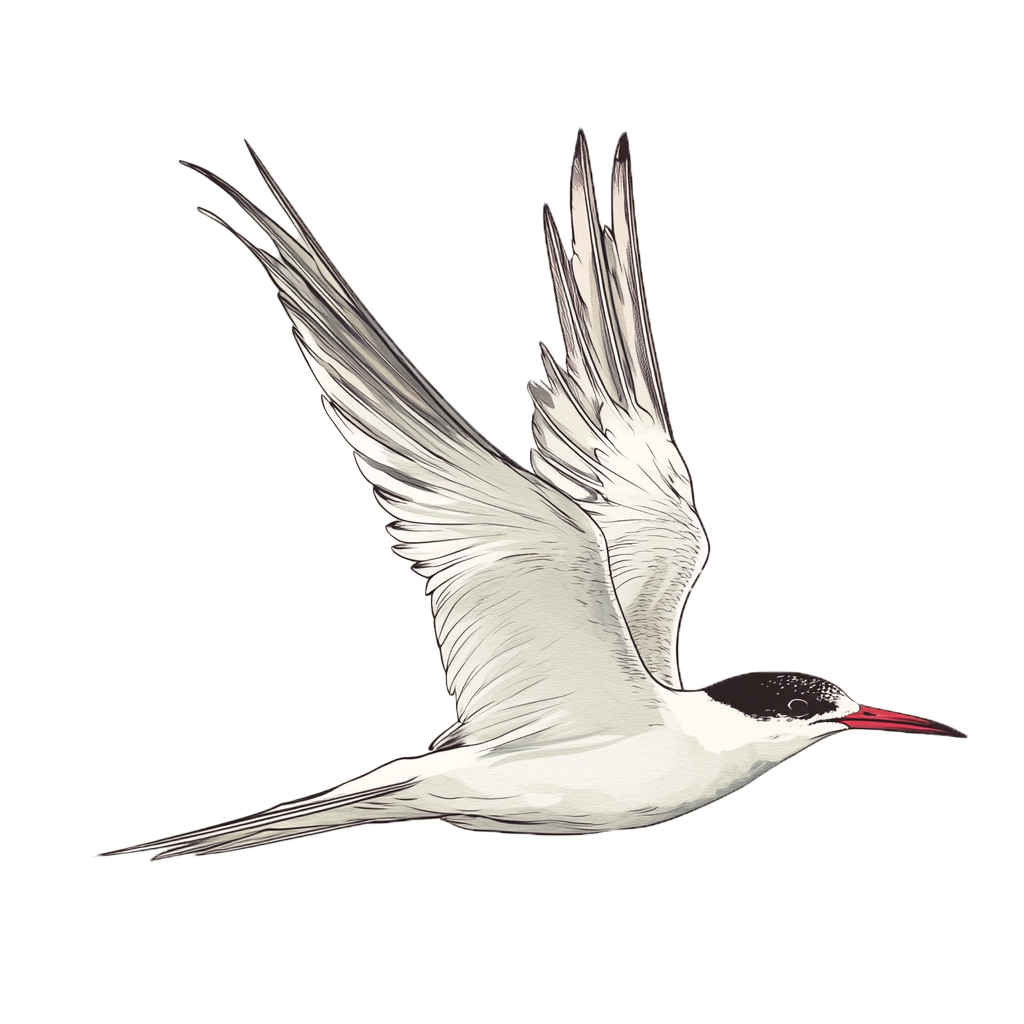
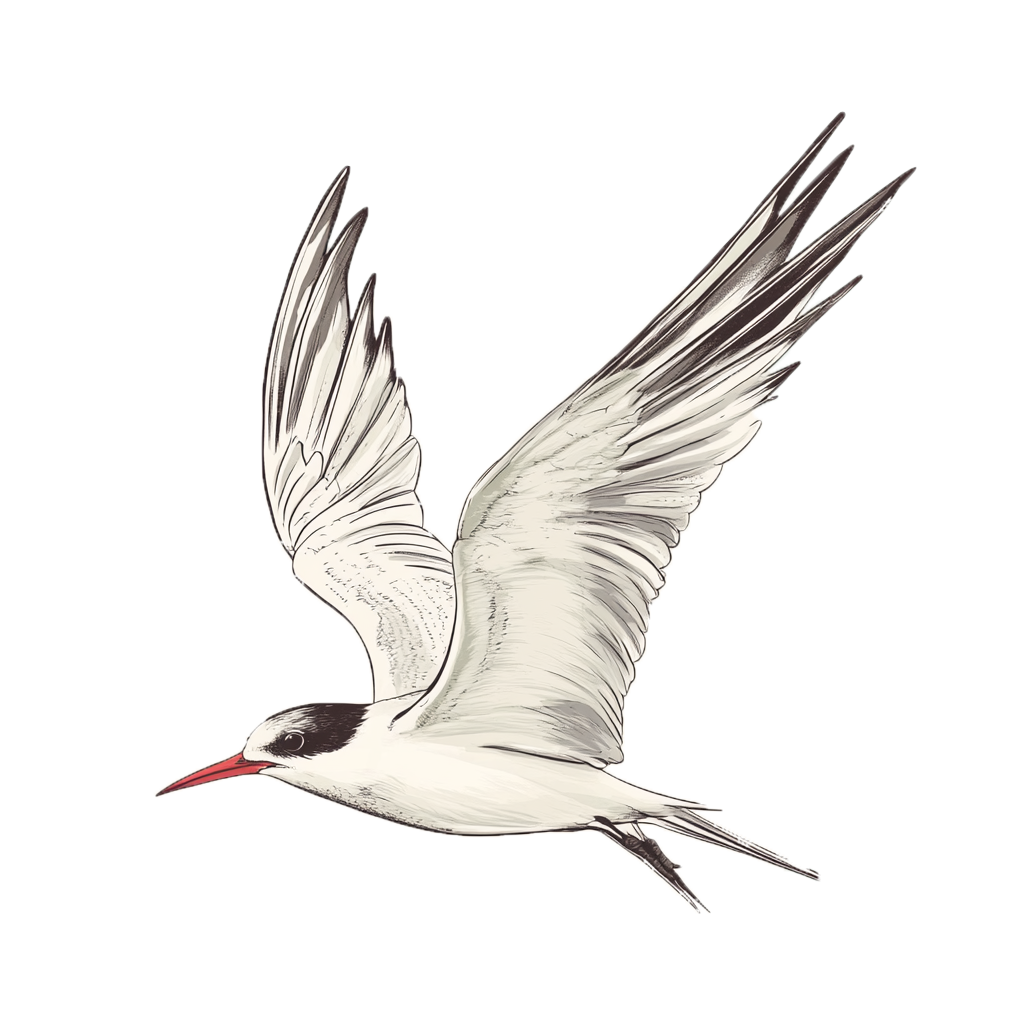
Imagine a life where summer never ends – constantly on the move, chasing the sun. That’s the extraordinary existence of the Arctic Tern—a small, unassuming bird that undertakes the longest migration of any creature on Earth. With its delicate white and grey plumage, a sharp black cap, and striking red beak and legs, the Arctic Tern may seem fragile at first glance. But beneath this slight frame lies a traveler of staggering endurance, one that chases the sun from pole to pole in an unrelenting journey spanning tens of thousands of kilometers.
It’s hard not to admire them, perhaps even envy them a little—the way they trust the winds, the way they lean into the vastness of the world without hesitation.
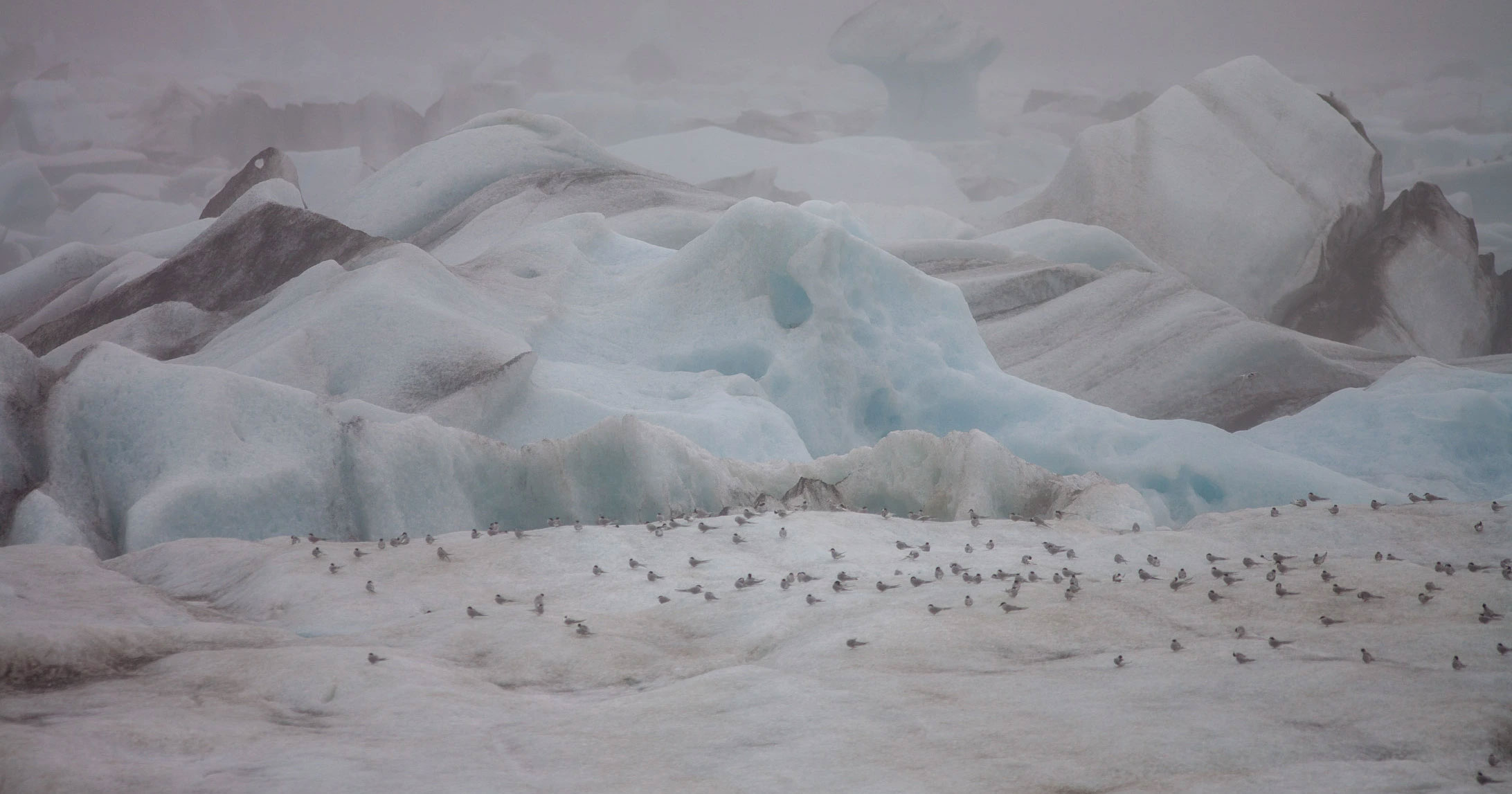
Each year, as the northern summer reaches its peak, Arctic Terns nest in the high latitudes, from the Arctic Circle to as far south as the northeastern United States and the Netherlands. Their chicks, a mix of brown and white, emerge from nests that cradle siblings of different hues. A reminder, maybe, of the variety life brings, even under the same sky, even within the same family. But as autumn whispers its arrival and the sun sails closer to the horizon, the terns take flight, embarking on an epic southward migration. They ride the wind, skimming across oceans and continents, covering immense distances with a grace that belies the sheer exertion of their feat.
There’s something familiar in that seasonal restlessness, that quiet urgency to move before the cold sets in—something deeply human in the way they respond to the changing world around them.
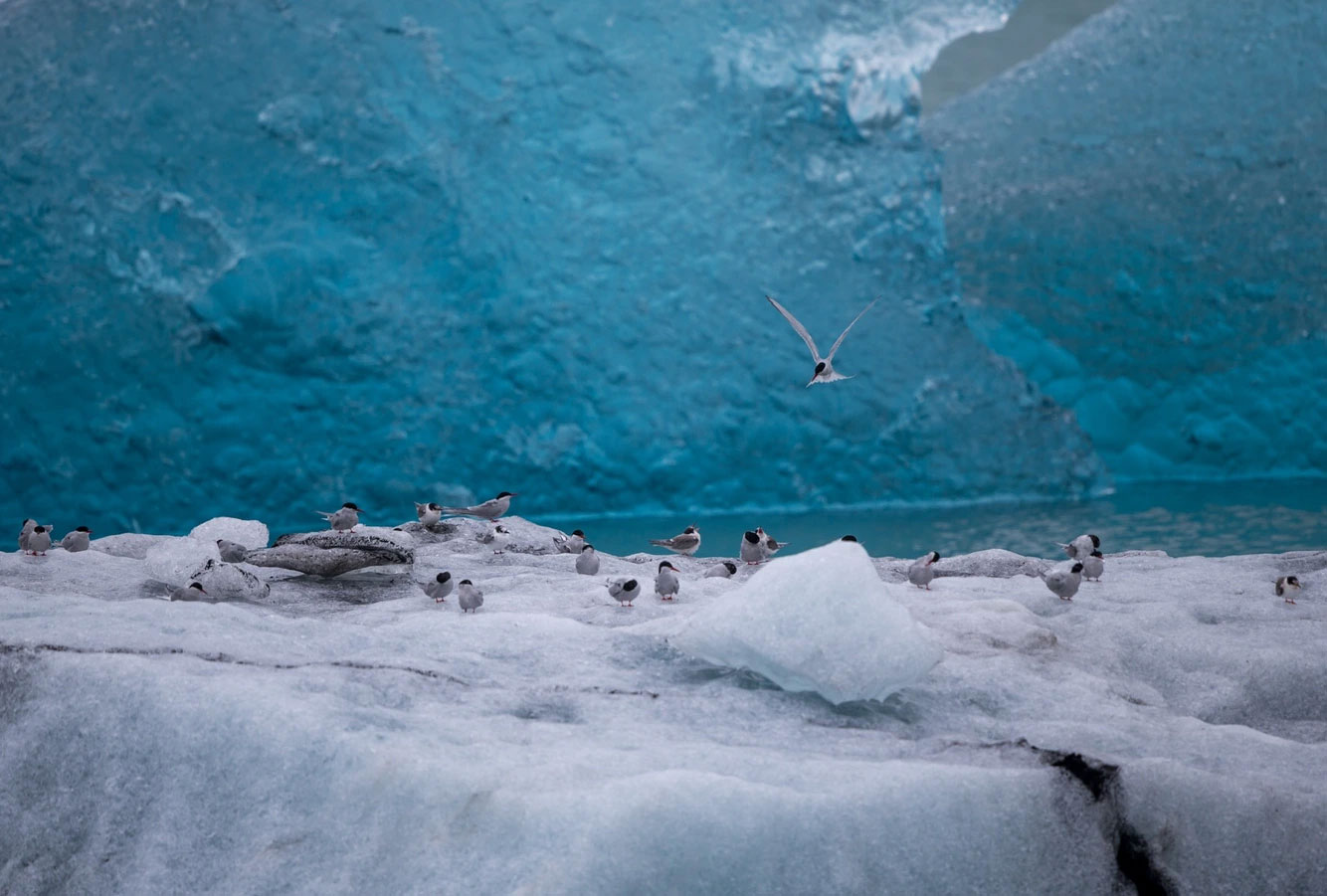
Rather than a direct route, their journey is dictated by the rhythms of the wind, turning what could be a straightforward flight into an elaborate dance with the elements. One Arctic Tern, tagged in northern England, was recorded reaching Melbourne, Australia, in just three months. When they finally arrive in Antarctica’s summer, they feast on the ocean’s bounty, feeding on krill and small fish amid drifting ice floes. Here, they molt, briefly shedding the very feathers that carry them across the globe. For a short time, these birds—masters of the sky—find themselves flightless, tethered to the frozen seascape.
But the most astonishing part of their odyssey is that it does not end there. As the Antarctic summer wanes, they take to the air once more, tracing their way back to the Arctic to breed. These birds are not just wanderers but creatures of deep fidelity. Arctic Terns often mate for life, yet after raising their young, partners may part ways, soaring off to different corners of Antarctica. And yet, year after year, they reunite in the north, as if drawn together by an invisible tether stretched across the planet.

For now, the Arctic Tern’s story remains one of resilience. Unlike many migratory species, they are not yet endangered, but the growing specter of climate change threatens their future. Shifting wind patterns, melting sea ice, and ecological upheaval pose new challenges to these seasoned travelers. Last year, an Arctic Tern was spotted off the Mumbai coast—a sighting not recorded in over a century. Was it a fluke, or a sign of shifting migratory patterns in a rapidly changing world? We, too, are finding ourselves on new paths, sometimes straying from the familiar, as the world changes beneath our feet.
The Arctic Tern’s journey is a testament to the boundless reach of nature’s rhythms, a reminder that some creatures live in perpetual motion. In their wings, we glimpse a world where borders dissolve, and the earth is one vast, interconnected expanse—where endurance is not just survival but a way of being.
And perhaps, in watching them, we are reminded of the rhythms that guide our own lives: the call to move, to rest, to return, and to keep going, no matter how great the distance.