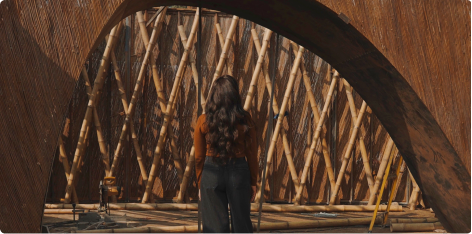
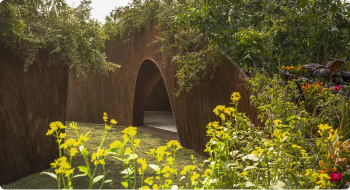
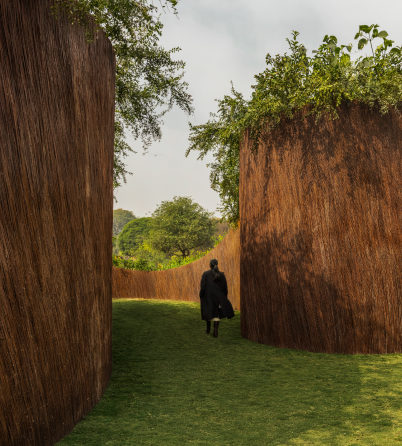
The inaugural edition titled Sacred Nature, was set within the gardens of Sunder Nursery, the large scale spiral installation drawn from the spatial and spiritual logic of India’s sacred groves. Constructed from upcycled invasive lantana and layered with over 50 plant species to form a living canopy, the Pavilion embodied a dialogue between restoration and remembrance, acknowledging colonial ecological histories while gesturing toward renewal.
Founder and Creative Director of Aranyani, Tara Lal is also the conservation scientist whose conceptual vision shaped the pavilion and its central spiral form. Rooted in her long engagement with ecology and sacred landscapes, the pavilion draws inspiration from spirals found throughout the natural world.
Indigenous Plants
of the Pavilion
The Pavilion canopy features both native Indian species and plants that have lived alongside people here for centuries. Some are indigenous to India, while others arrived over a thousand years ago through trade, migration, and shared agricultural histories. They are now naturalized, non-invasive, and woven into India’s food, medicinal, and cultural landscapes.
NUMBER
OF SPECIES
50
TOTAL NUMBER
OF PLANTS
7,700
Invasive Species as Material
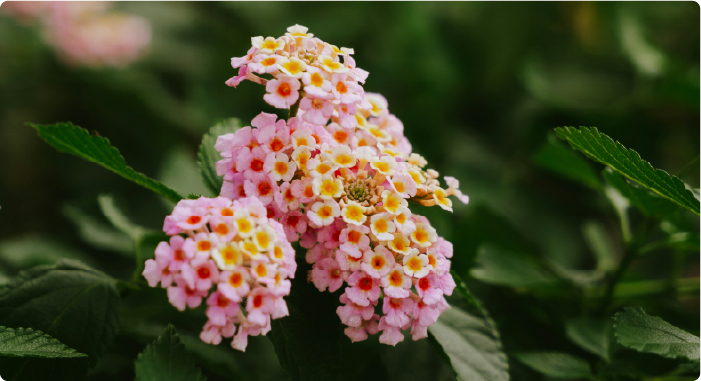
Lantana camara is one of the world’s most invasive species. The British and Portuguese brought Lantana to India in the 1800s as an ornamental plant. The Pavilion’s outer shell was built from upcycled Lantana camara. The pairing of invasive material below and indigenous species above is deliberate: a living argument that damaged land, when tended to, grows back. This is Aranyani’s decolonial ethos made material, reclaiming what colonial introductions overtook.
The Shrine
The central point of the Pavilion’s spiral pathway was conceived to hold a shrine, establishing it as a sacred focal core within the spatial journey. This rock was not mined for this purpose, it is an off-cut, considered waste and unusable for construction.
The inaugural edition titled Sacred Nature, was set within the gardens of Sunder Nursery, the large scale spiral installation drawn from the spatial and spiritual logic of India’s sacred groves. Constructed from upcycled invasive lantana and layered with over 50 plant species to form a living canopy, the Pavilion embodied a dialogue between restoration and remembrance, acknowledging colonial ecological histories while gesturing toward renewal.
Founder and Creative Director of Aranyani, Tara Lal is also the conservation scientist whose conceptual vision shaped the pavilion and its central spiral form. Rooted in her long engagement with ecology and sacred landscapes, the pavilion draws inspiration from spirals found throughout the natural world.
Indigenous Plants
of the Pavilion
The Pavilion canopy features both native Indian species and plants that have lived alongside people here for centuries. Some are indigenous to India, while others arrived over a thousand years ago through trade, migration, and shared agricultural histories. They are now naturalized, non-invasive, and woven into India’s food, medicinal, and cultural landscapes.
NUMBER
OF SPECIES
50
TOTAL NUMBER
OF PLANTS
7,700
Invasive Species as Material
Lantana camara is one of the world’s most invasive species. The British and Portuguese brought Lantana to India in the 1800s as an ornamental plant. The Pavilion’s outer shell was built from upcycled Lantana camara. The pairing of invasive material below and indigenous species above is deliberate: a living argument that damaged land, when tended to, grows back. This is Aranyani’s decolonial ethos made material, reclaiming what colonial introductions overtook.
The Shrine
The central point of the Pavilion’s spiral pathway was conceived to hold a shrine, establishing it as a sacred focal core within the spatial journey. This rock was not mined for this purpose, it is an off-cut, considered waste and unusable for construction.