The Spiral Path: How Nature’s Oldest Design Shaped the Aranyani Pavilion
WORDS
Ishani Singh
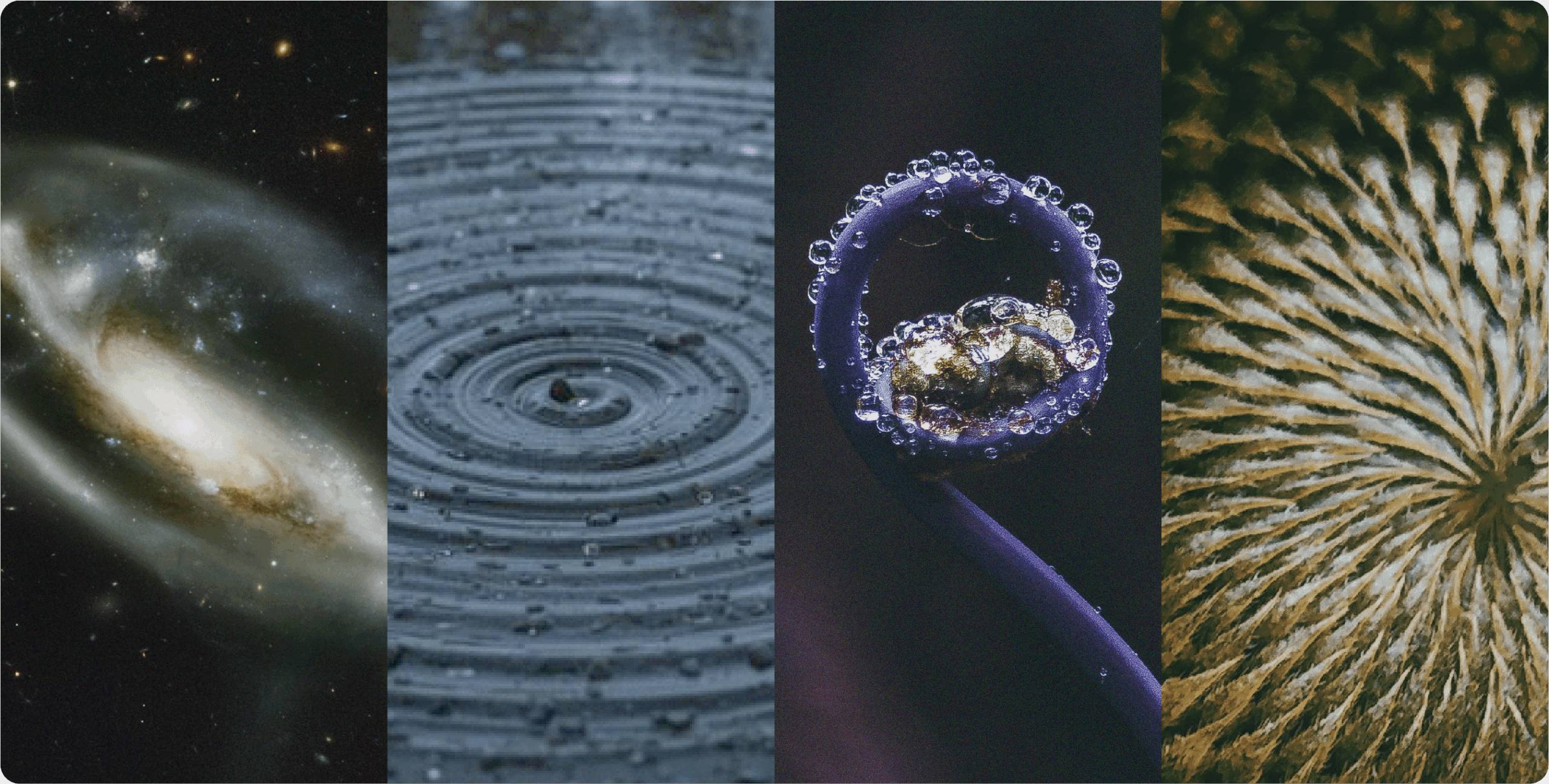
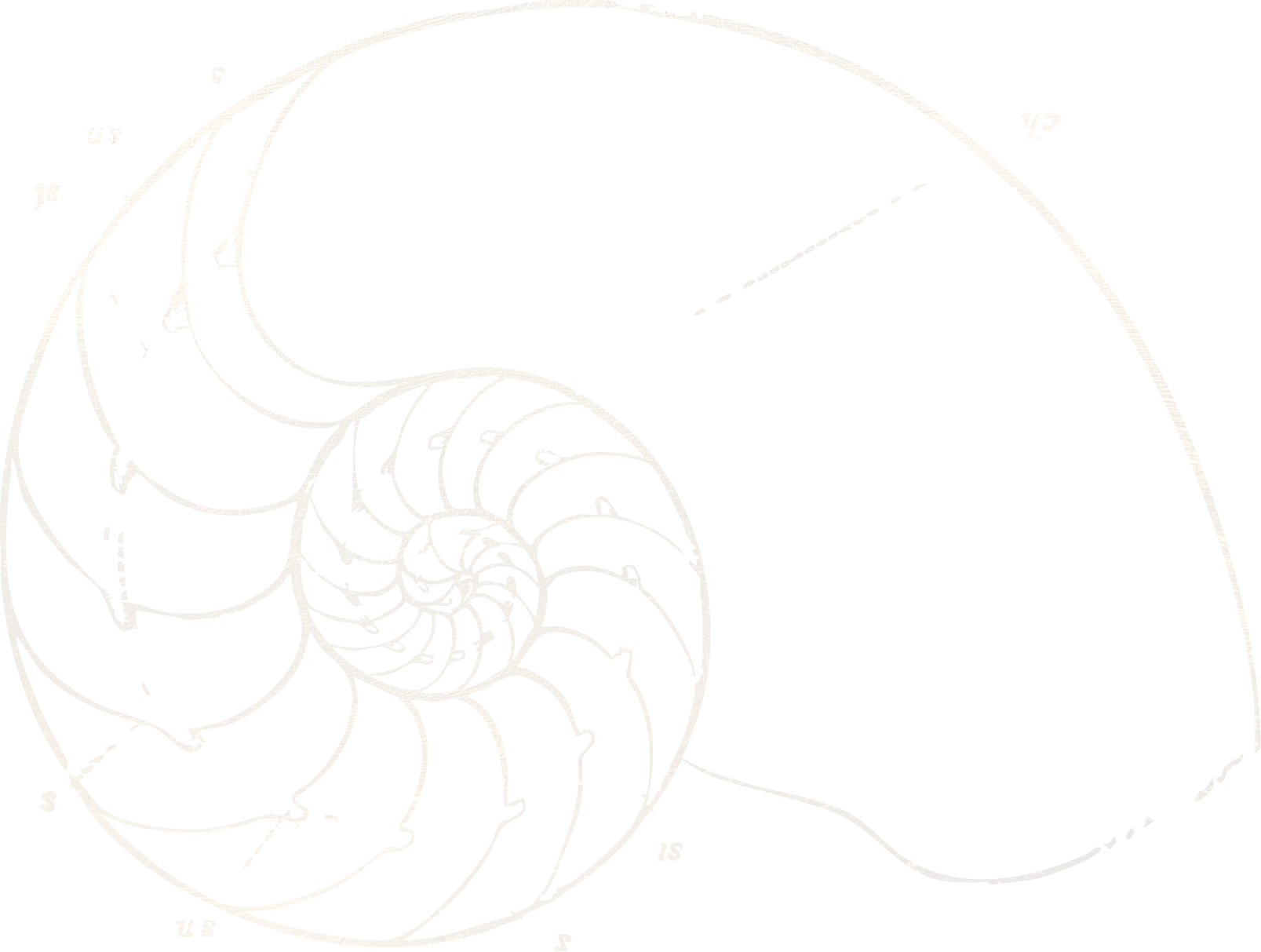
Long before architects discovered the golden ratio, nature was already building with it. The nautilus shell, the unfurling fern, the arrangement of seeds in a sunflower, all follow the same mathematical principle: a pattern so efficient it appears at every scale of existence, from DNA helixes to spiral galaxies. This geometry became the conceptual foundation for the inaugural edition of the Aranyani Pavilion at Sunder Nursery.
The spiral is quite literally how nature grows. Plants arrange their leaves in spirals to maximise sunlight exposure. Seeds pack themselves in spiraling patterns to use space most effciently. Storm systems rotate in spirals because that is how energy moves through the atmosphere and water. The spiral represents transformation through the most economical means possible—expansion without waste, growth without breaking balance.
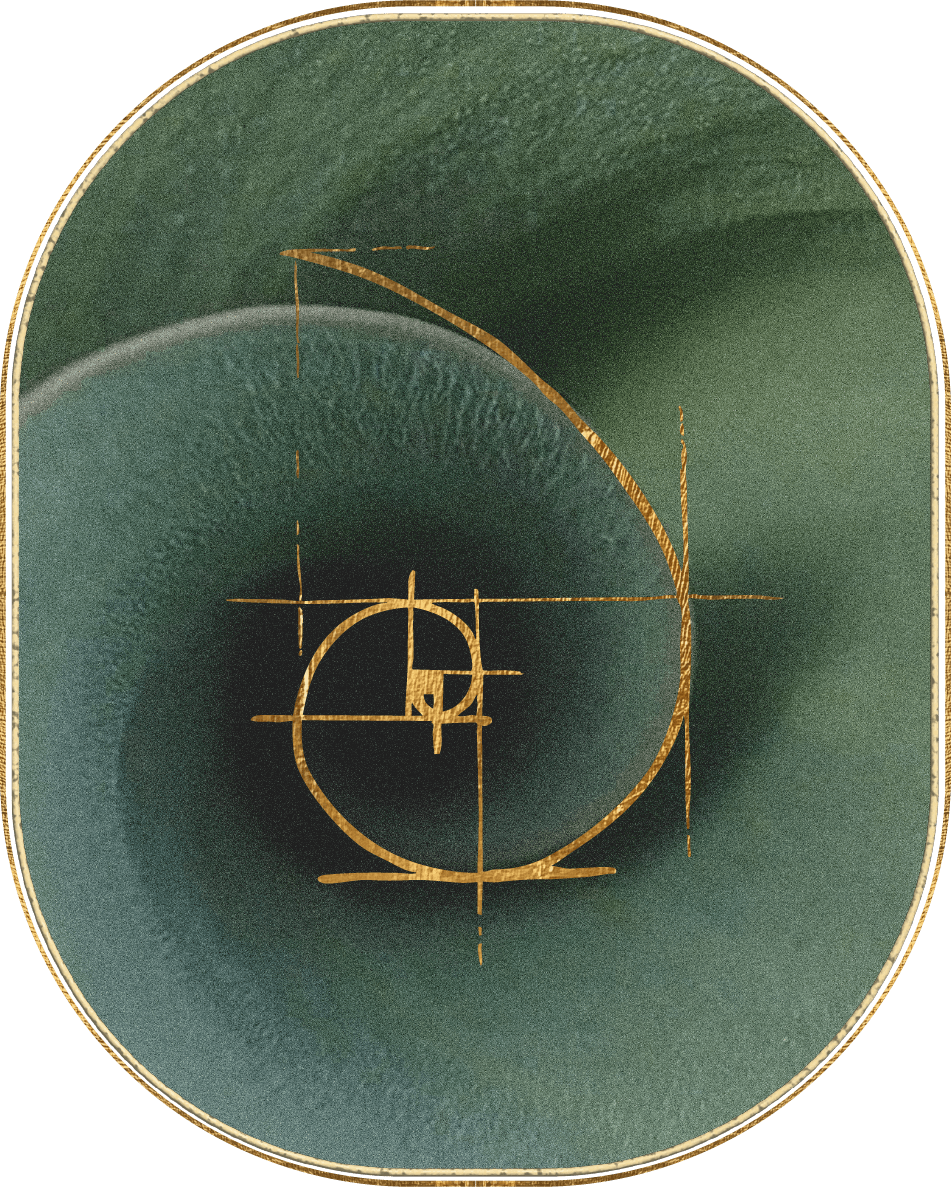
This principle is rooted in what mathematicians call the Fibonacci sequence and the golden ratio (approximately 1.618). When successive Fibonacci numbers are divided, they approach this ratio with remarkable consistency. In nature, this translates to phi spirals or logarithmic curves where each turn maintains the same proportional relationship to the one before it. The result is a form that can scale in nitely while remaining self-similar at every level.
Research shows that logarithmic spirals appear in biological organisms because they represent the most efficient growth pattern. A plant producing new cells in spiral formation, following the golden angle of roughly 137.5 degrees between each cell, creates arrangements with no gaps and maximum effciency.
What ancient cultures called “sacred geometry” was, in fact, their recognition of these recurring natural patterns. Communities living close to the land observed circles in celestial movements, spirals in water and vine growth, symmetries in ower petals. They wove these shapes into ritual spaces and cultural memory not only because the forms held mystical power, but because they re ected the underlying structure of the world around them. Sacred geometry was observed with reverence.
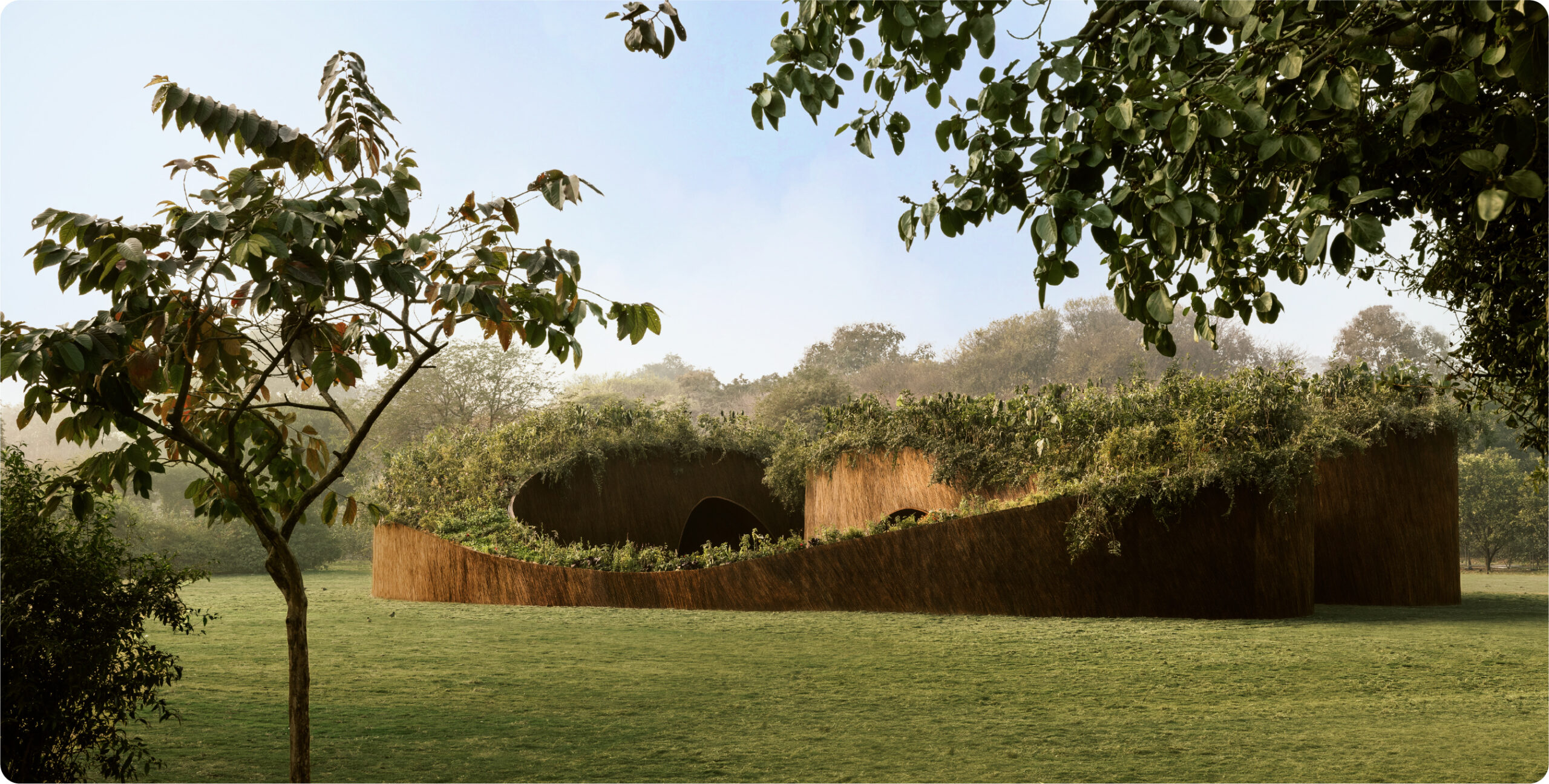
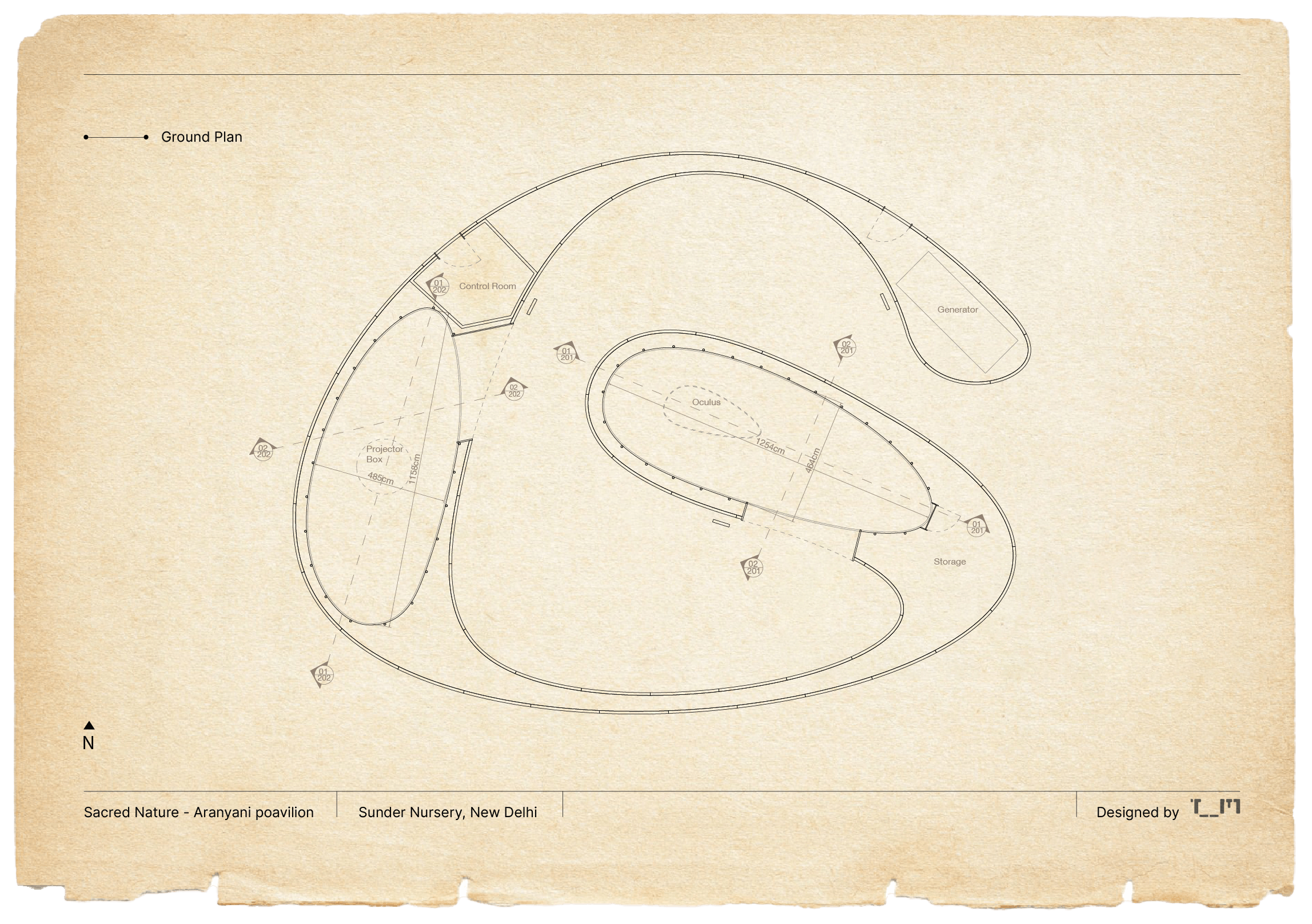
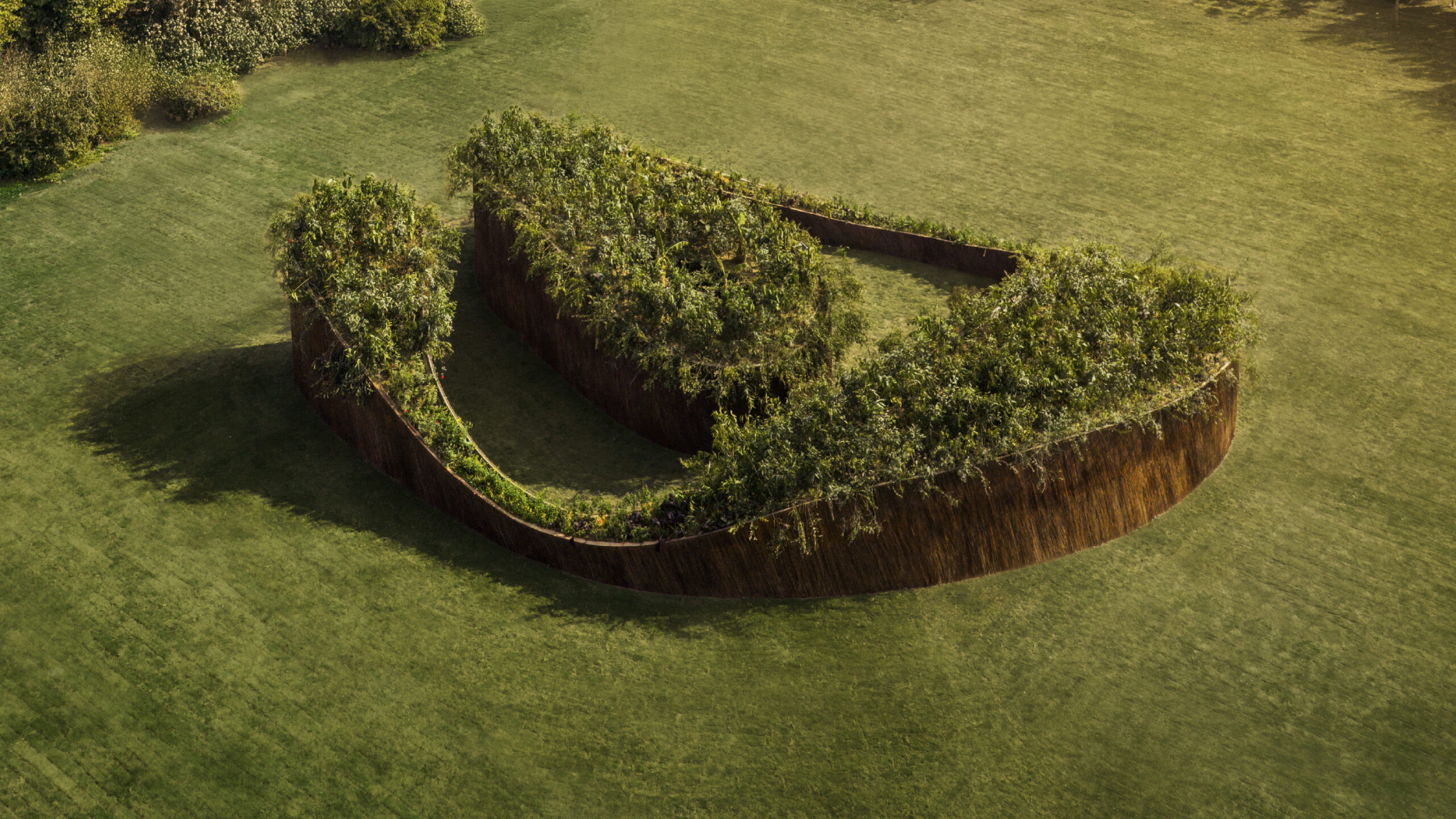
The Aranyani Pavilion translates this observation into contemporary architectural form. Its spiral pathway winds inward, narrowing as it descends, mirroring the mathematical precision of phi spirals found throughout the natural world. Visitors move from the external urban environment toward an interior shrine, tracing the same pattern that governs how galaxies form and how ferns unfurl. The point is simple: to come into yourself. The spiral path creates the conditions for that inward turn, using geometry to guide attention from the outer world toward internal awareness.
Spirals in nature always occur with directional pairs, clockwise and counterclockwise, expansion and contraction, growth and return. Where there is one spiral, there is always another moving in opposition, creating dynamic balance. The Pavilion’s visitors spiral inward on entry and outward on exit, physically enacting this principle of complementary movement. The path brings you back to the beginning, changed by the inward journey and the stillness at its centre.
The “calm eye” of any spiral—that central point around which all else rotates— corresponds to the Pavilion’s shrine gallery. Here, at the mathematical center, is the point of stillness, the zero from which the Fibonacci sequence begins.
In doing so, the Pavilion aligns architecture with ecosystem restoration by using design to support living systems as they recover, regenerate, and rebalance. Rather than simply representing sacred geometry, the building becomes part of it. Just like one more spiral among the countless others found in forests, seedheads, and growth patterns throughout the natural world.
This is ecological architecture as a statement. By making nature’s mathematical language visible—by allowing visitors to walk the spiral path that seeds and shells and galaxies all follow—the structure becomes both knowledge and experience.

The spiral teaches what it has always taught: that growth is cyclical, that transformation requires return, and that the patterns governing the smallest seedhead are the same patterns that govern the largest galaxy. To follow the spiral is to remember that we are part of this same mathematical pulse, subject to the same principles of balance, effciency, and continuous renewal that shape all living things.