ARANYANI PAVILION

Inside the Aranyani Pavilion: Meet the Architects

PUBLISHED

February 2, 2026

WORDS

Ishani Singh

PHOTOGRAPHY

Tenzin Lhagyal, Darsh Vohra

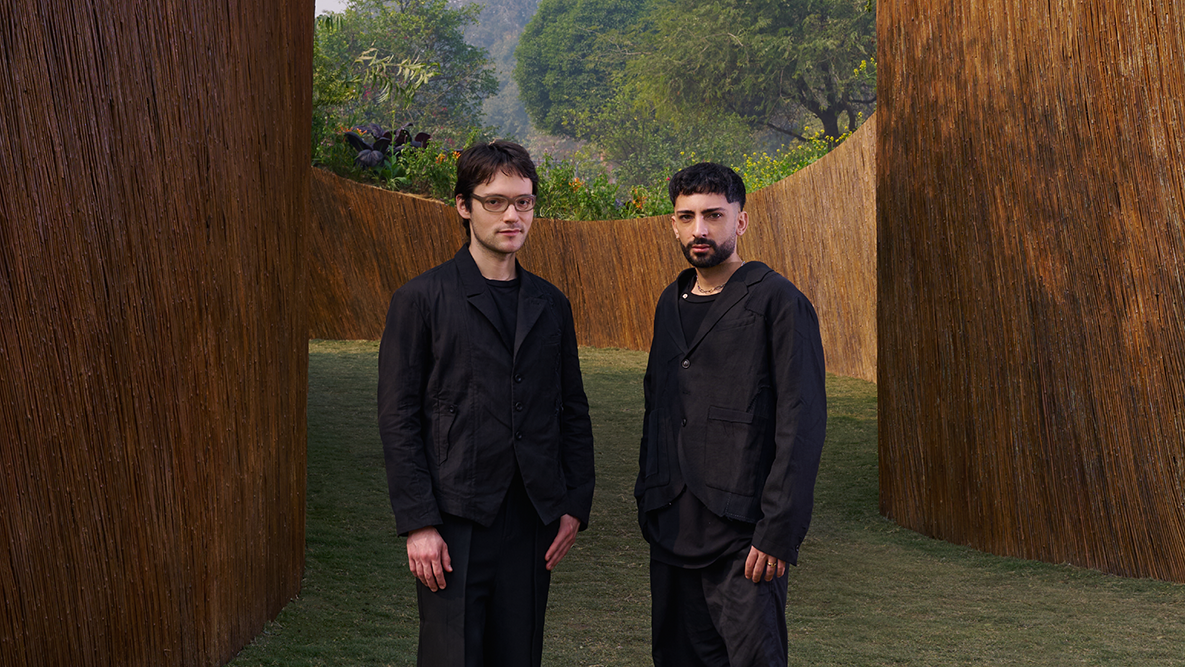
When Aranyani founder Tara Lal first approached T__M.space, the architecture practice founded by Mario Serrano and Tanil Raif, she didn’t come with blueprints or material specifications. She came with a vision: a gathering place at Sunder Nursery that could hold what Aranyani stands for. Care for land, respect for local ecologies, and a renewed relationship with nature grounded in ecological knowledge.

For most architects, such openness can be unsettling. For Serrano and Raif, it was exactly the kind of brief they look for.


“We weren’t told to use bamboo or lantana or even natural materials,” Raif recalls. “It was simply: this is what Aranyani stands for. Can architecture express that?”


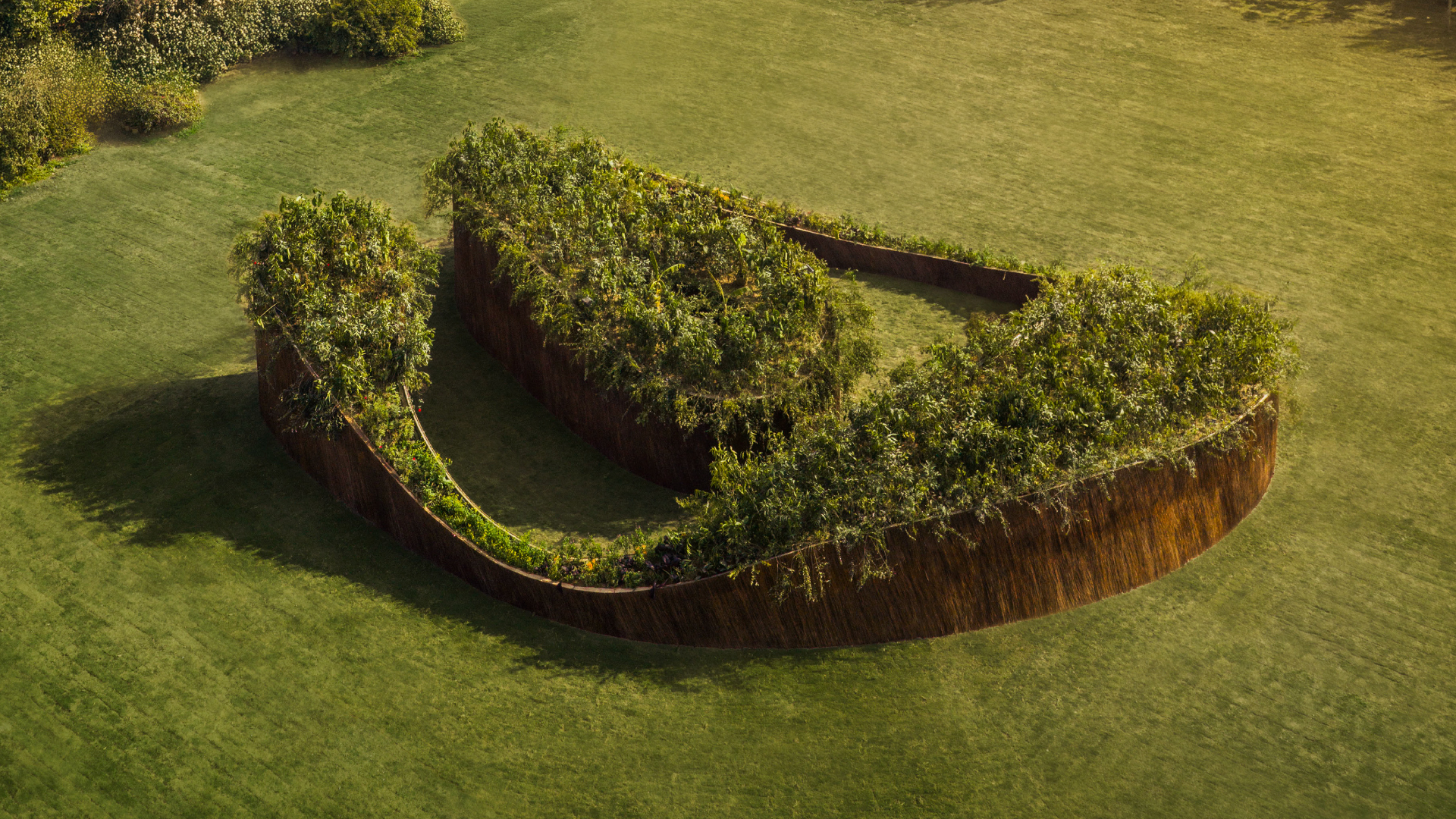
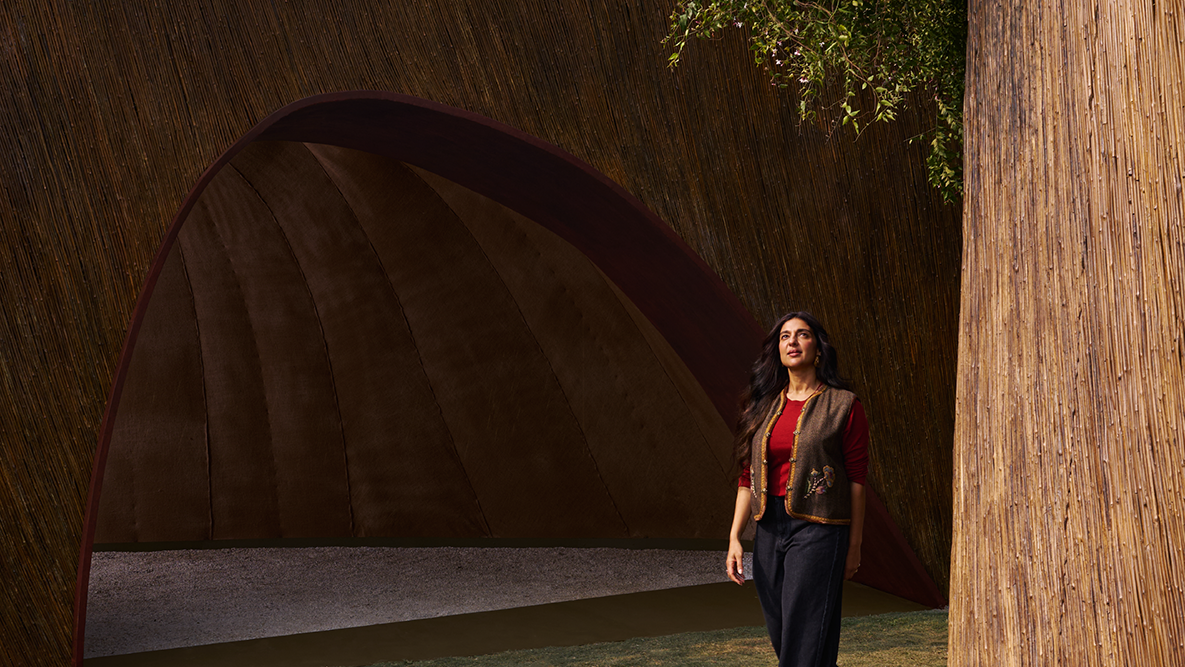
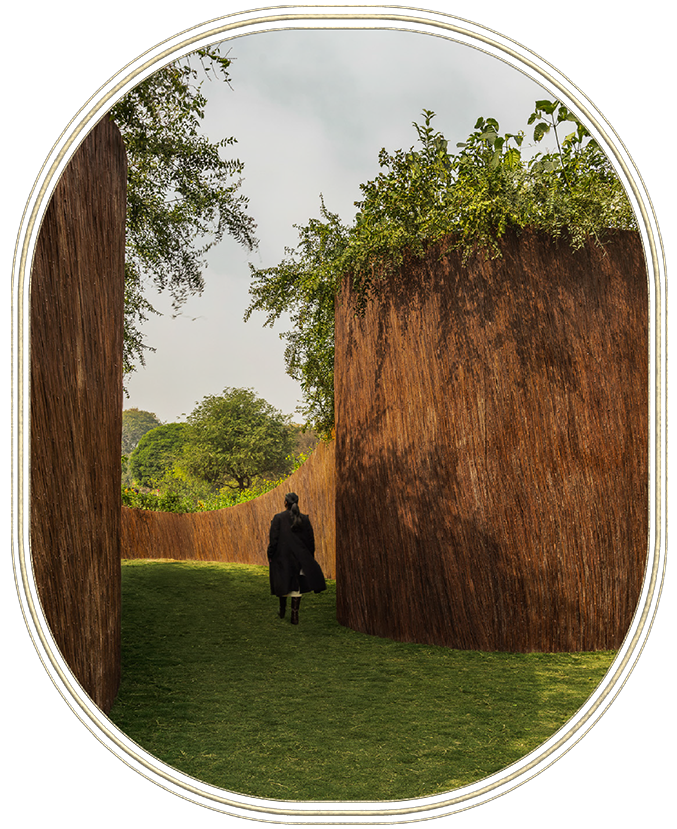
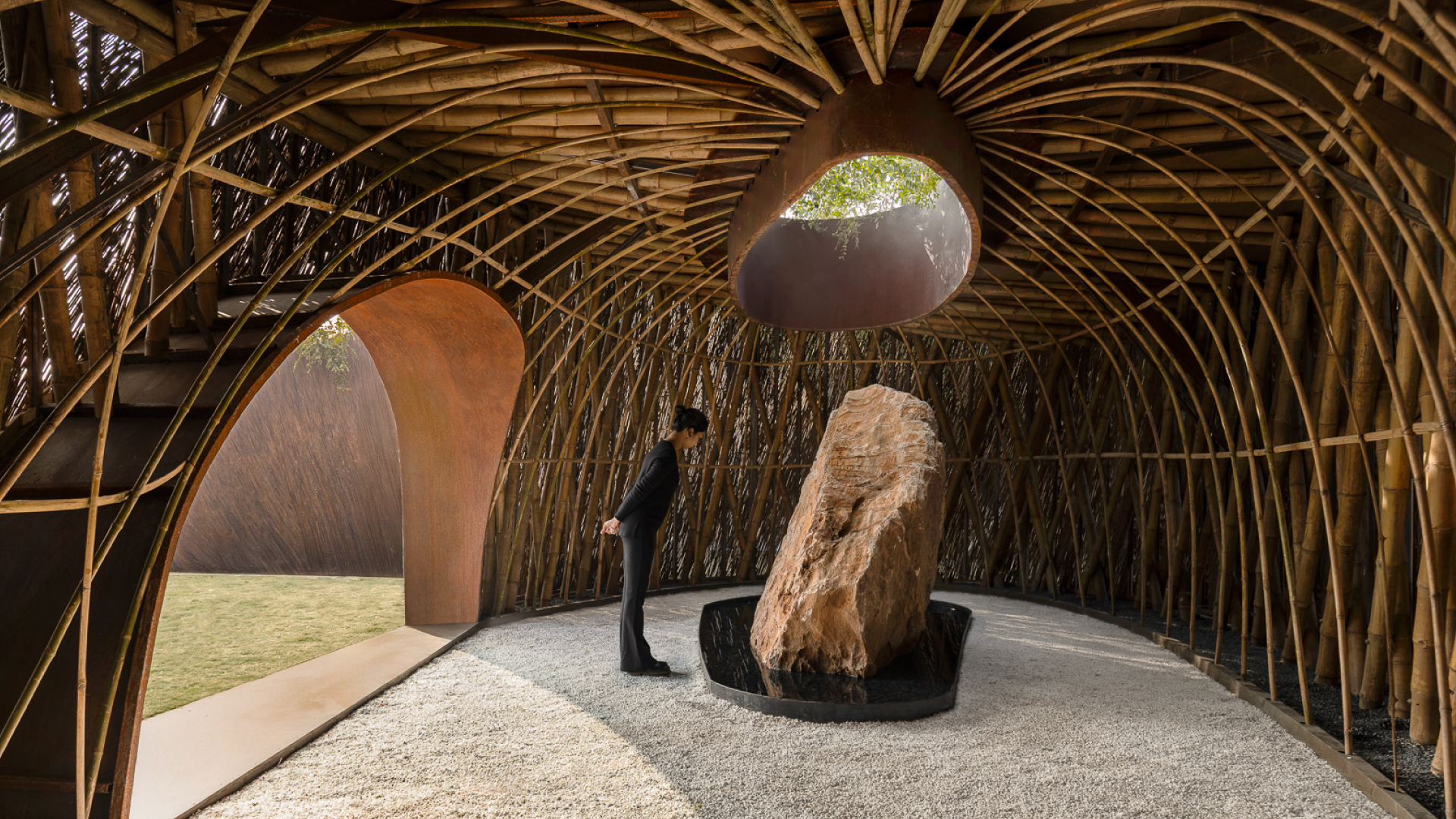
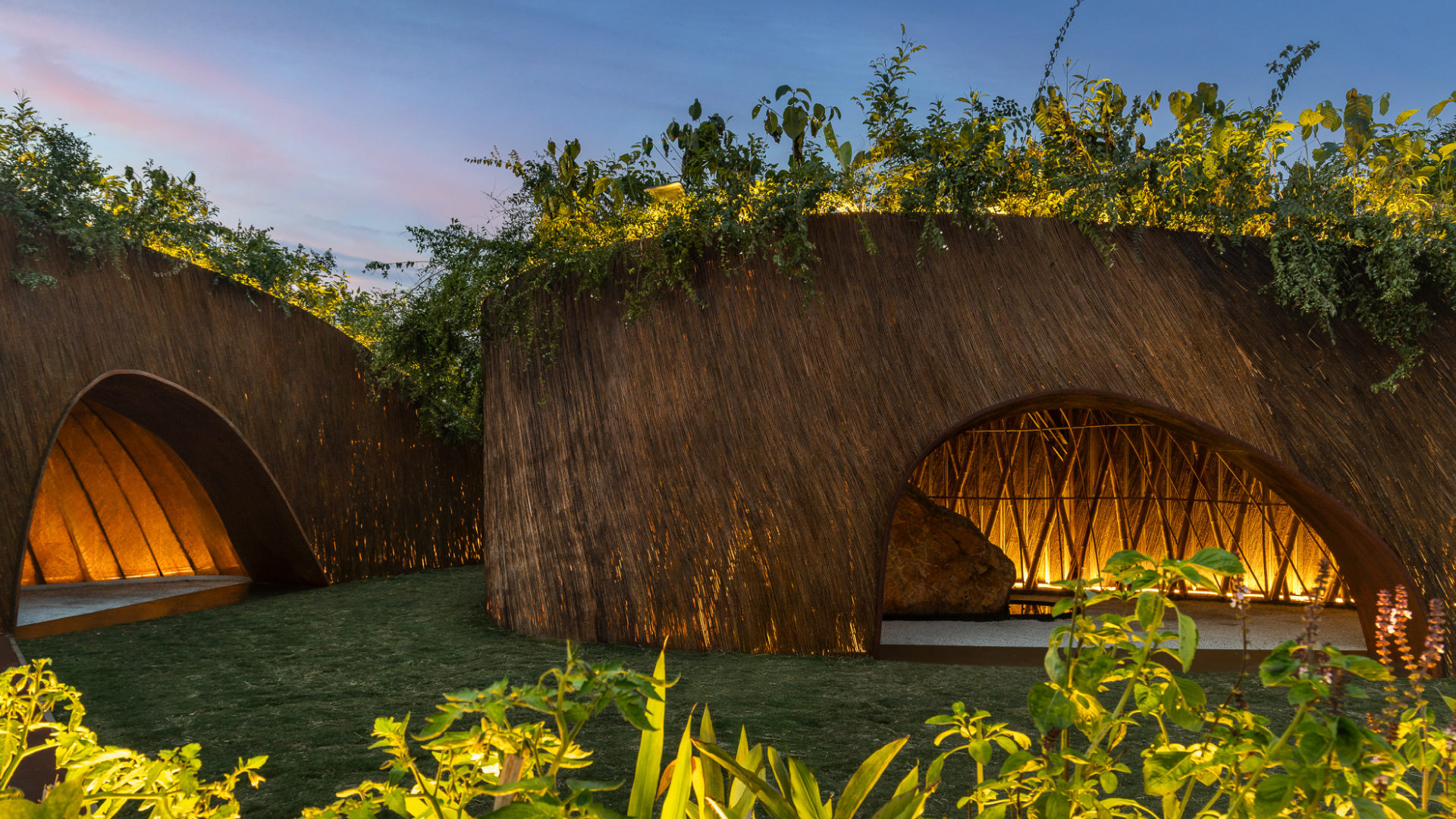
What they designed became the Aranyani Pavilion: a monumental spiral-shaped walkthrough installation, built from bamboo and upcycled invasive Lantana, carrying above it a living canopy of native plants. Part ecological art installation, part sustainable architecture, the structure feels less like a building and more like a path you walk through—an invitation to mindfulness in nature rather than spectacle.

A Practice Shaped by Reaction


Tara chose Serrano and Raif because their practice thinks differently about nature and built form.


Their partnership began years earlier at the Illinois Institute of Technology in Chicago, a school steeped in Miesian modernism. Both describe themselves as instinctively “reactionary” to that legacy.


“We were fascinated by subcultures, by energies in cities that don’t fit neat architectural categories,” Raif says.

After Chicago, their paths diverged. Serrano went to London and Bartlett’s intensely digital design culture. Raif headed to Los Angeles and Harvard’s more plural academic battleground. Yet they stayed in conversation, trading ideas across continents.

Their studio, T__M.space, emerged from that dialogue: a practice that refuses to choose between nature and technology, positioning itself at the intersection of ecological architecture and computation.

“It’s almost a dichotomy,” Raif explains. “Computation on one side, very raw natural material on the other. The Pavilion is a hybrid of the two.”

Their personal relationships with landscape aligned with what Tara was seeking. Raif speaks of deserts, canyons, and open terrain as formative spaces—places that taught him orientation without instruction. Serrano, largely a city-dweller, describes finding nature in fragments: parks, edges, and accidental clearings within dense urban life. These contrasting experiences shaped how they imagined the Pavilion—not as an object to admire, but as a space to move through, somewhere between wilderness and city.

Ammonite Fossil

From Patterns to Path

The spiral emerged through conversations about patterns in nature—forms that recur across cultures, shaping temples, gardens, and settlements long before being named or theorised.

“Before there was a pavilion, there was an idea about movement,” Raif and Serrano say. “Tara spoke about walking in sacred groves, about paths that don’t rush you, that slowly guide you inward.”

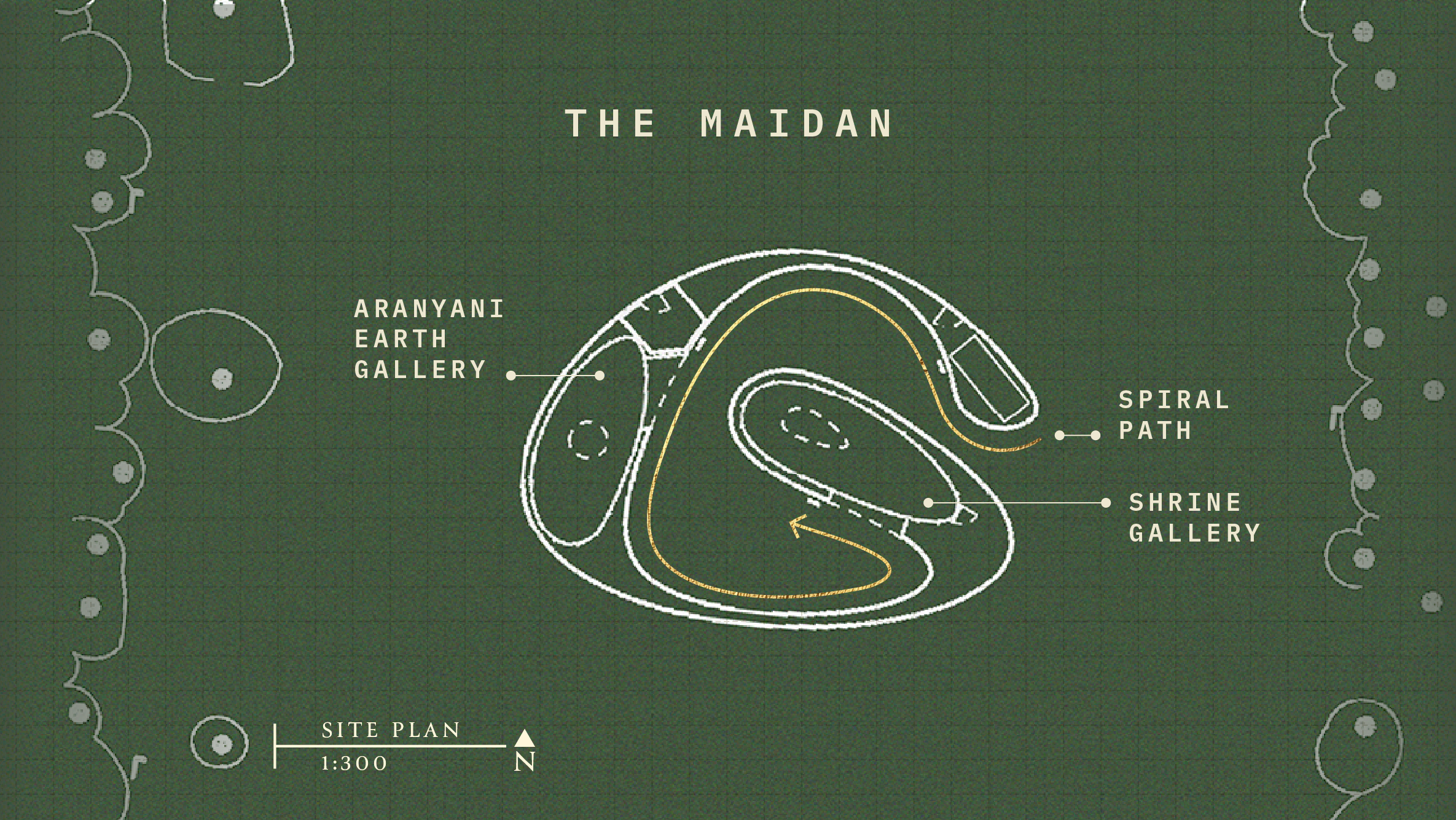
That image stayed with them. Rather than designing a fixed object, they imagined a route to be experienced. The plan followed the logic of a forest walk: meandering, indirect, allowing moments of pause and discovery.

“In nature there isn’t one defined way,” Raif explains.

“We wanted a path that gives direction but still feels open, like you’re being led rather than instructed.

For Raif, this echoed memories of landscapes where orientation unfolds gradually. Serrano connected it to the way urban parks soften the city’s rigid geometry. Both wanted the Pavilion to feel like a slowed encounter with ground, light, and plants—an architectural framework for attentiveness.

Serrano translated this intuition through computational tools, testing dozens of variations. The spiral allowed the structure to be compact yet expansive, constantly revealing new angles of light, sound, and vegetation.


“It’s choreography more than geometry,” he says. “The form organises how your body moves.”


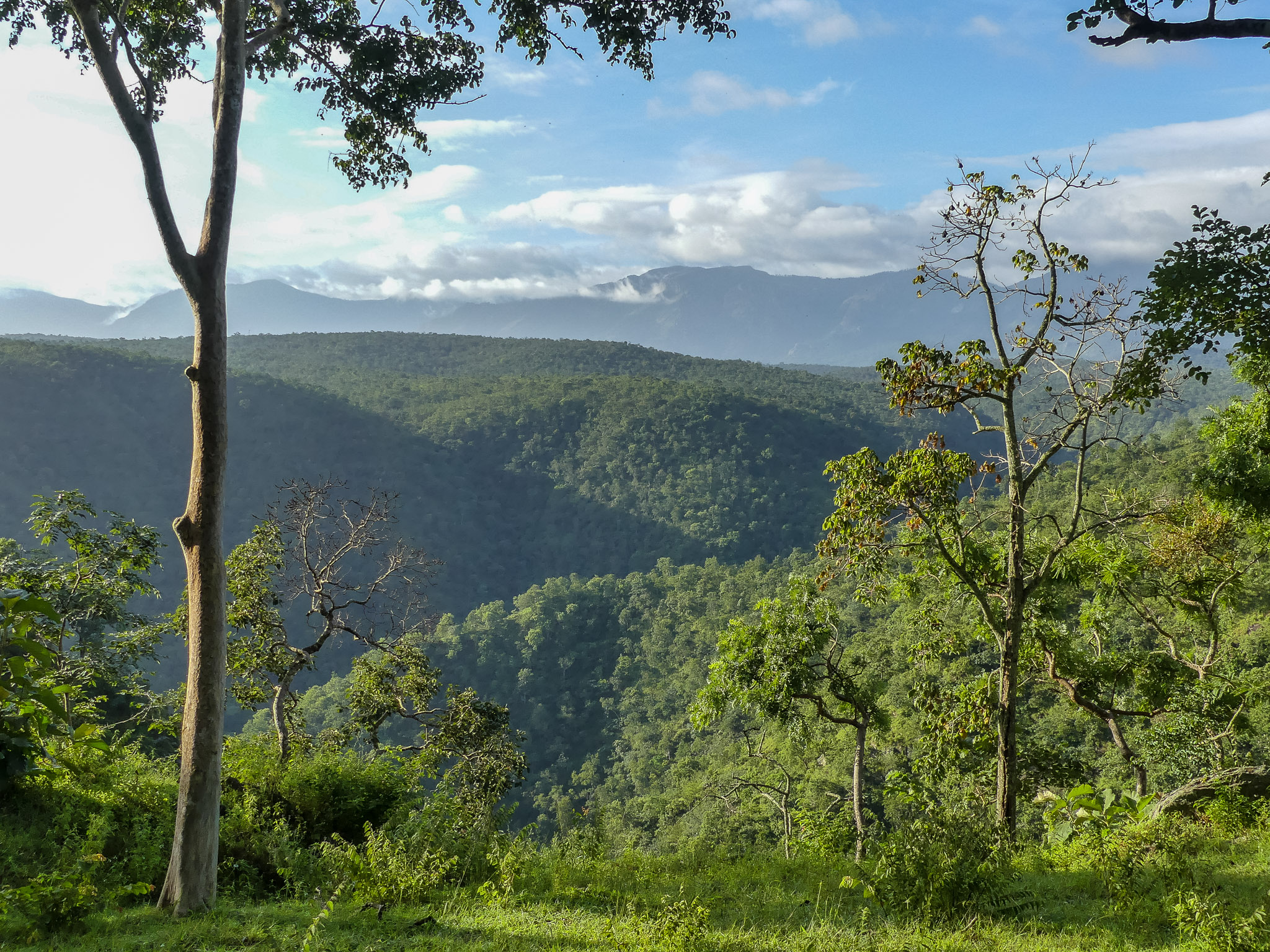
The references were subtle rather than monumental: Himalayan forest trails, the memory of sacred geometry carried through Indian gardens, and the universal human habit of circling toward something meaningful. The centre was imagined not as a destination, but as a point of stillness.

“The pavilion shouldn’t be immediate,” Serrano says. “You wander, search a little, and then arrive.”

Material as Dialogue

If the spiral shapes movement, lantana shapes meaning.

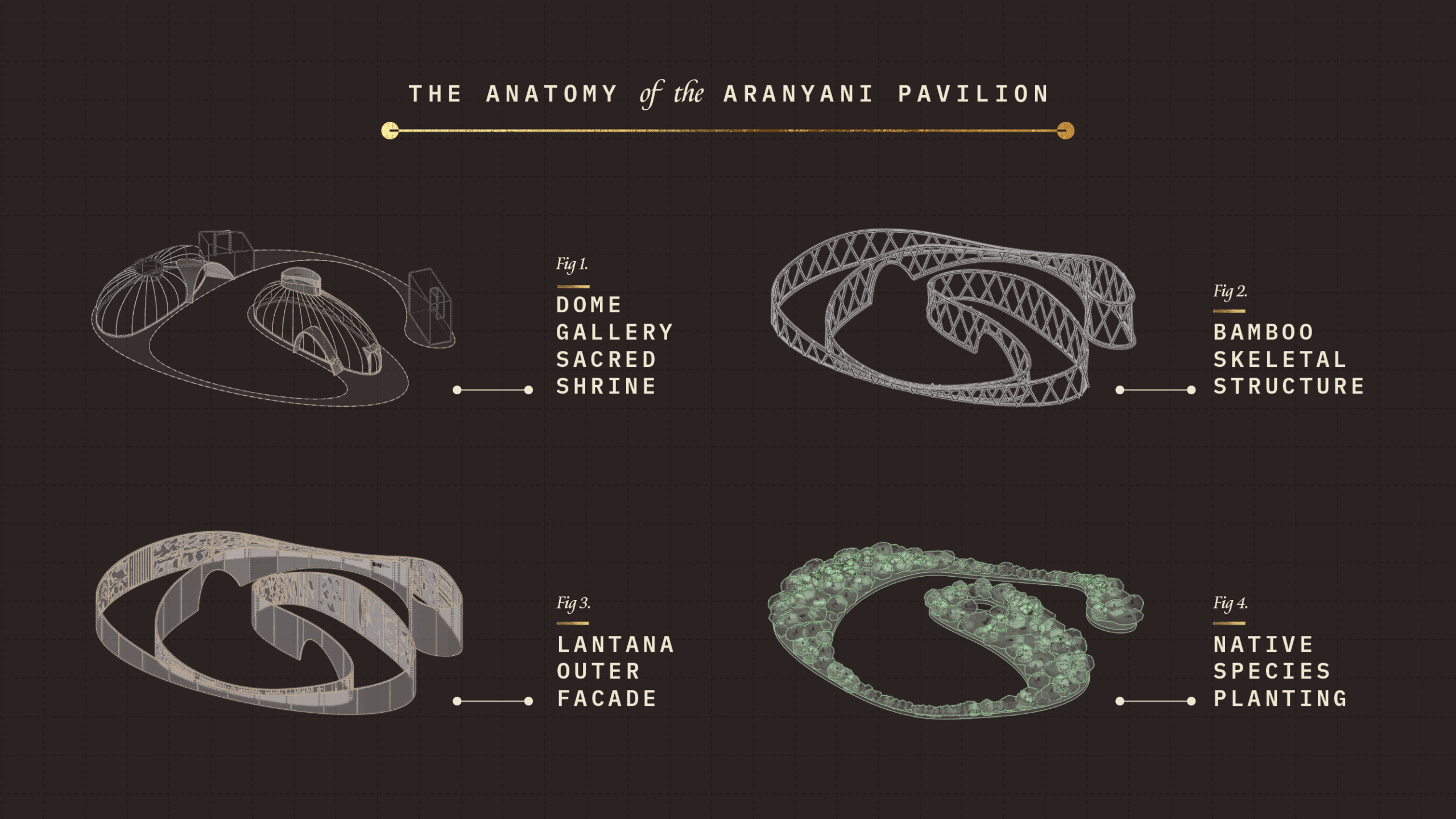
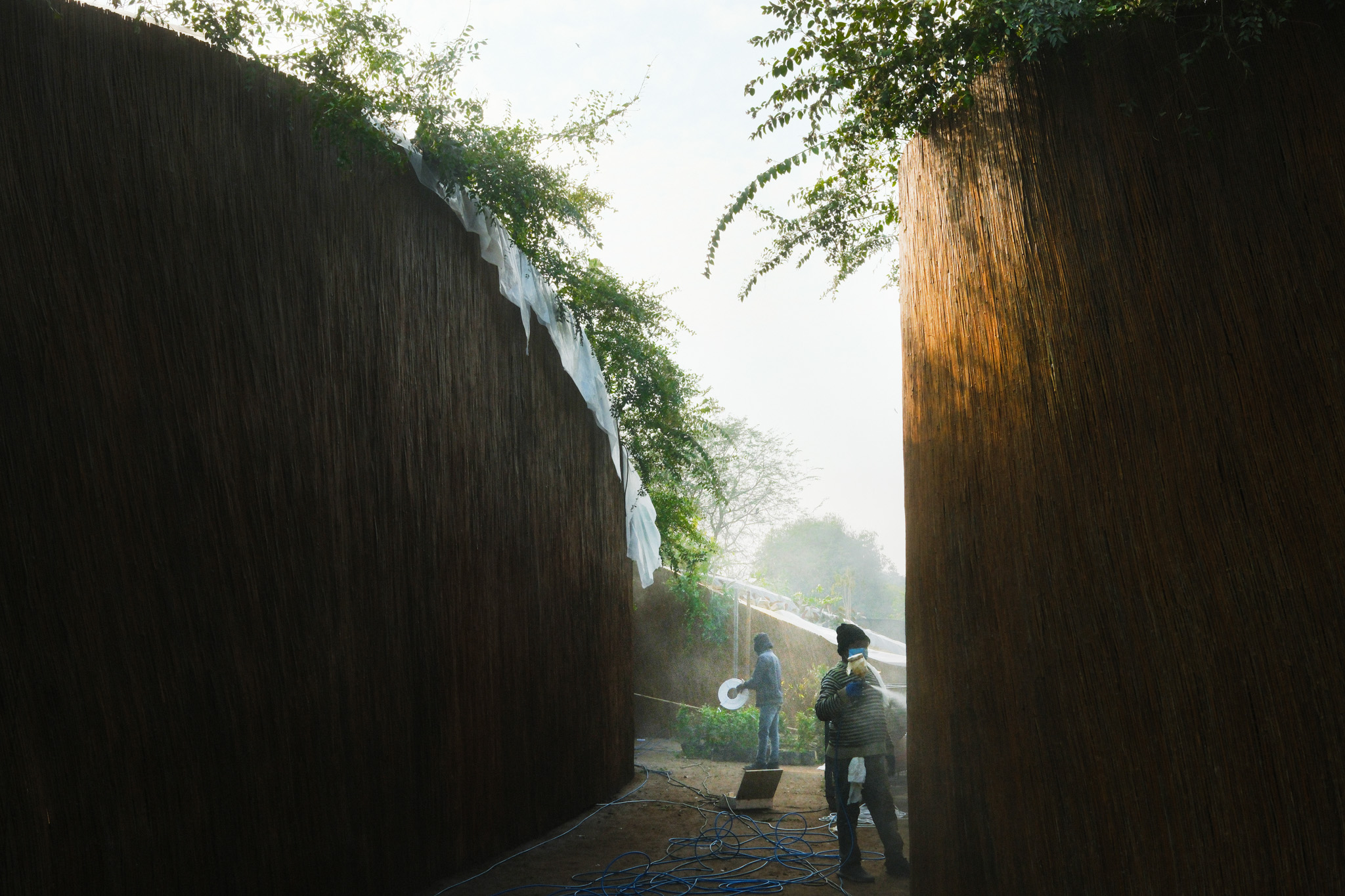
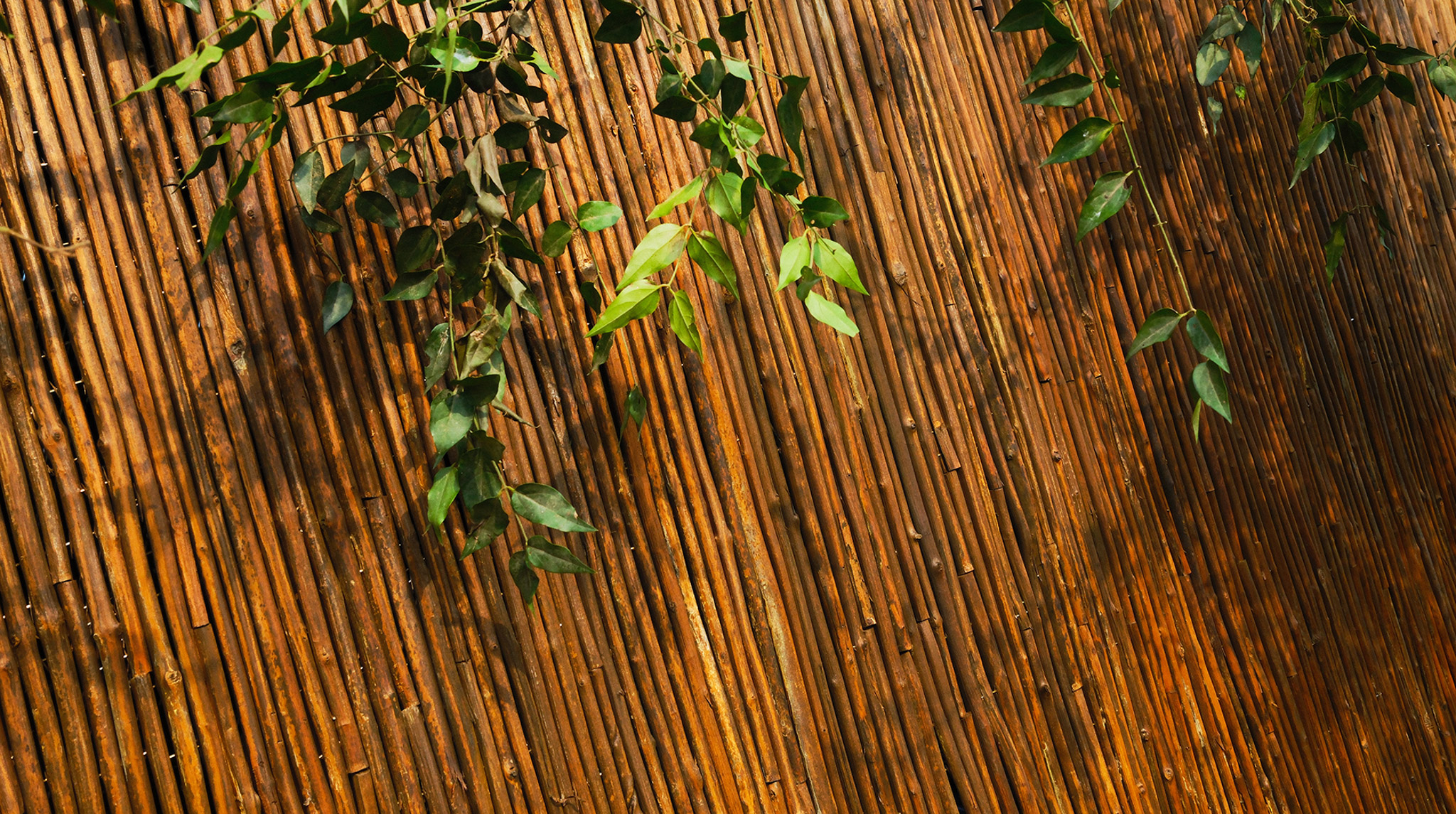
The Pavilion’s outer shell is made from upcycled Lantana camara, an invasive species introduced during the colonial period that now overwhelms native forests across India. For Serrano and Raif, using it was an act of nature conservation, rooted in ecological reasoning rather than symbolism.

Across nearly 600 square metres of ground, with a footprint of 200 square metres and an inner space of 100 square metres, the structure required thousands of lantana branches. Above this skin sits a canopy of indigenous plants. Bamboo forms the structural skeleton, chosen for its tensile strength and renewability. The result is a layered system where invasive and native meet as a physical encounter rather than an abstract idea—an experiment in green sustainable architecture.

Nothing quite like this has been attempted before. Lantana has long been cleared, burned, or left to rot. Here, the question was different: could it hold up a building?


Raif links this approach to vernacular traditions.


“Vernacular architecture is about local materials, local knowledge, communities knowing how a building works. That’s environmentally and socially healthier.”


His upbringing in Cyprus, shaped by Venetian, Ottoman, and British histories, informed a pragmatic view of heritage.


“You don’t reject everything that arrived through colonisation,” he says. “You learn what works and what doesn’t.”

Architecture as Relationship


Both architects resist prescribing how visitors should behave. The spiral has a single entrance, but no instructions.


The journey begins before the threshold. The open field of Sunder Nursery becomes the first room; the Pavilion, its second.

“It creates its own pocket,” Serrano says. “A pathway where noise drops away.”


At the centre lies the Shrine Gallery, holding a single stone. Stone is one of humanity’s earliest markers of meaning. Across cultures, it has served as threshold, witness, and anchor to ritual. The Pavilion’s temporary structure of lantana and bamboo spirals inward toward this permanence—toward something that holds memory differently than anything we construct.

“Architecture can carry cultural memory without nostalgia,” Serrano notes. “It can be contemporary and rooted at the same time.”

Beyond the Build


The Aranyani Pavilion shows what becomes possible when vision meets the right collaborators. Serrano and Raif brought technical skill and conceptual depth to an idea Aranyani holds at its core: that architecture can listen to land, that materials deemed worthless may still carry intelligence, and that gathering spaces can foster care.


“We don’t see this as an object,” Raif says. “It’s a conversation.”


Rooted in ecological architecture and attentive to ecological knowledge, the Pavilion builds with what has been overlooked. It creates gathering space from disruption, and proposes architecture as a relationship rather than monument. The spiral guides visitors inward—to nature, to slowness, to reflection. What they discover there is their own, an open-ended invitation into dialogue between land, material, and design.

KEEP READING

Inside the Aranyani Pavilion: Meet the Architects

ARANYANI PAVILION

From Introduction To Invasion: How Non-Native Plants Took Root In India’s Ecosystems

SACRED EARTH

Restoring The Earth’s Memory: The Decolonisation of Nature

SACRED EARTH